All names have been changed except the name of the space and its location.
Introduction
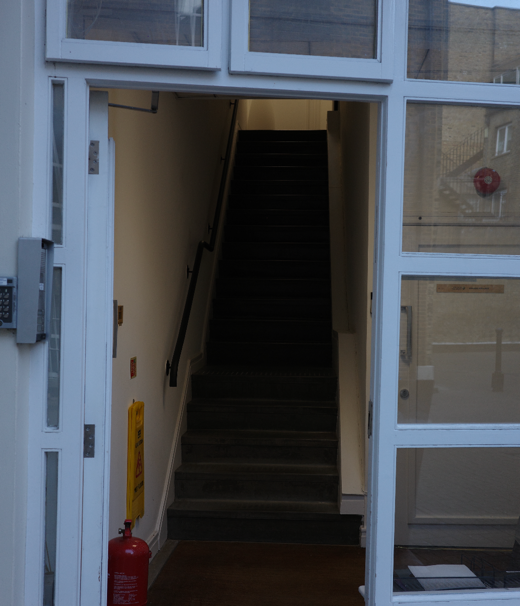
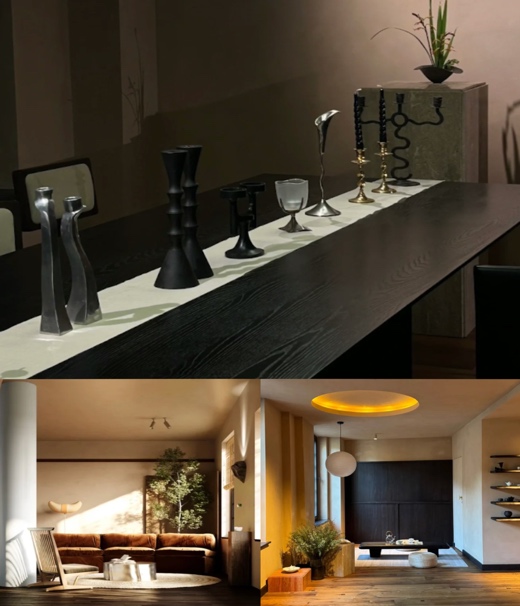
When I first came to Gégend, it was on a cold, windy winter day. Following the entry instructions, I thought I had found the gate to the courtyard. However, I noticed that there was an electronic lock on the door, so I had to reread the instructions carefully and enter the password. It took me several more minutes to find the entrance to Gégend after walking into the courtyard. It was located on the first floor in a small building, and the door was far from obvious (Figure 1). I could hear music before entering the space. It grew louder as I walked in: a relaxing, melodic symphony. Upon entering, it was like walking into someone’s home. The decorations gave it the look of an open living room in an oil-painting style, with a long table, sofas and zafus (round cushions) in this small space (Figure 2). A young Chinese woman dressed in all black was sitting at a long table and said “Welcome” to me. Later, I realised she was Emma, one of the founders of Gégend. She gave me a menu, followed by a detailed introduction of tea, teaware, tea snacks and the whole space, in a calm and peaceful tone. I took my first sip of tea, and Emma lit smoky incense. My nervousness at being in an unfamiliar place began to fade.
After the first visit, I went to the space a few more times and learned that Gégend could not simply be described as a tea house. Instead, Emma and the other co-founder described it as a multifunctional art space that can be used for tea drinking, art exhibitions, workshops or events, and private rentals. Initially, I was drawn to the sense of calm that came from the various functions of the space. How can the sensory experiences of tasting tea contribute to this sense of calm? How does the design of the space amplify the multi-sensory experiences? How do events and exhibitions create a sense of community in the space?
However, as my observations developed, I noticed that several aspects of Gégend resisted a single definition. Its identity as an art space or tea house remained open to interpretation. Its functions shifted and sometimes clashed, while friendship overlapped with commercial relationships. The founders’ business strategy also remained unsettled. These were different kinds of openness and uncertainty, rather than evidence that everything in the space was equally vague. This paper examines when ambiguity or opacity could become a resource for shaping such a space, and when uncertainty became a burden. I use ambiguity to describe the coexistence of different possible meanings, and opacity to describe the limits of explaining the space through a single interpretation. I distinguish these from practical flexibility, conflicts over use, and uncertainty about the business. These distinctions help explain both the appeal of Gégend and the difficulties of managing it.
Methodology
The study was conducted in Gégend, a multifunctional art space in London. The space was founded primarily by two Chinese people, Emma and Samuel (pseudonyms), and subsequently, other Chinese people in the UK joined with various skills. During my fieldwork, the space was open to the public on most days for drinking Asian teas and eating snacks. Periodic art exhibitions were also free to visit. There were also events such as a flower arrangement workshop, yoga sessions, and opening ceremonies for the exhibitions, for which a paid booking or an invitation was required. On some days, the space could be rented by individuals or companies for their private activities.
The main method I used for the research was participant observation. From February to the end of April 2025, I spent 4 to 5 hours per week in Gégend as a customer. This was a natural role that reduced much of the initial awkwardness and enabled me to casually talk with the founders, employees and customers. In addition, I attended several events, including the flower arrangement workshops, the opening of the exhibition and board games, where I had the chance to observe how the space operated and how people interacted.
I obtained permission for the research primarily from Emma, who was responsible for everyday operations, and informed other co-operators about my project. I conducted semi-structured interviews with both co-founders, Emma and Samuel. Meanwhile, I also conducted semi-structured interviews with a few customers who had been to Gégend. These interviews helped me gain a clearer understanding of different perspectives. My fieldnotes and interview transcripts formed the main body of data. I also took some photos for illustration. Moreover, as Gégend promoted itself on social media platforms (including Instagram, Rednote, and TikTok) and “most customers came to us from social media” (Emma), I also read and analysed the posts on these platforms.
However, one of the biggest limitations of my method was my limited access to the operations of the space, as I participated as a customer. I had to ask more questions about this in the interviews, but these could only partially compensate for this limited access. The range of perspectives was also limited. Although I had casual chats and interviews with around 15 people at the space, this was a small, non-representative group. Also, sending out questionnaires daily in Gégend was unrealistic because it would disrupt the business. Therefore, the views of some of the informants involved in my research should not be seen as representative of all visitors. All my informants were Asian, and most were Chinese, reflecting the customers I most often encountered during my visits. In a later interview, Emma described a growing English-speaking clientele. I did not collect demographic data to verify this, and the experiences of visitors outside my interview group remain underrepresented.
In addition, part of my fieldwork involved sensory experience. However, my report is based on texts and a few images. Audio and video could convey aspects of the atmosphere that text and still images cannot. One example is Zhang’s video “Twice Puer Tea in Hong Kong”, a supplement to her book “Puer Tea: Ancient Caravans and Urban Chic” (2013), which combines sound and moving images with written ethnography. This offers a possible direction for further research.
Beyond East and West
The formal name of the space is ‘Gégend 方寸’ (fāng cùn). Gégend is derived from German, a word selected by the co-founder, Samuel, which has the meaning of ‘area’ and ‘place’. 方寸 is a Chinese word selected by Emma, another co-founder, who told me that it indicates the basic unit of our understanding of space. The name brings together German and Chinese terms, while the space brings Chinese tea and teaware into a London setting.
Many customers described Gégend through its associations with Chinese tea and Eastern aesthetics in London. After reading posts about the space on various social media platforms, I noticed that most of the posts included words like ‘Asian’, ‘Chinese’ and ‘East’, with a hashtag or location about London. Likewise, Freya, after her first visit to the space, told me that she felt that the design of the entire space combined the ‘Chan’ or ‘Zen’ elements of Eastern Buddhism. Freya remarked that “it’s nice to see Eastern aesthetics in London”.
Thus, can we clearly define Gégend as a space of Eastern/ Chinese culture that fits the classic ‘East meets West’ narrative? In an interview with Emma, she rejected this idea and said, “The only thing we want to deliver is the power of tranquillity”. The two co-founders, Emma and Samuel, told me that their aim in designing the space was to help alleviate people’s anxiety about living in a big city like London. Although the tea and teaware imported from China invited cultural associations, the founders resisted defining Gégend solely through those symbols. The ambiguity lay in the coexistence of these interpretations: customers could approach it as a place of Eastern aesthetics, while the founders emphasised tranquillity without fixing its cultural meaning.
Emma extended this openness to the idea of ‘space’ itself. Although Gégend occupied a small room, she described space as “fluid, expandable, and can be derived from very many things.” Fluidity also means possibilities. Different people share different ideas of the space. Clara, an introverted woman who visited Gégend regularly, described the space as somewhere people can enjoy their time drinking tea and enjoying artworks. However, Freya, an outgoing person, said the space was highly social and she enjoyed chatting with others there. These preferences are not unique to Gégend, as many cafés accommodate both solitude and conversation. Here, they show how visitors could use the same space differently without agreeing on a single purpose.
Multifunctionality and Shifting Uses
The fluidity is also reflected in the shifting or sometimes overlapping functions of Gégend. As its website stated at the time, “Gégend is designed for infinite potentials and provides a wide range of activities without thematic restrictions.” In practice, I observed several major functions, including tea drinking open to everyone, events or workshops with a pre-booking requirement, free periodic art exhibitions, and private rental. The space constantly shifted between these different purposes.
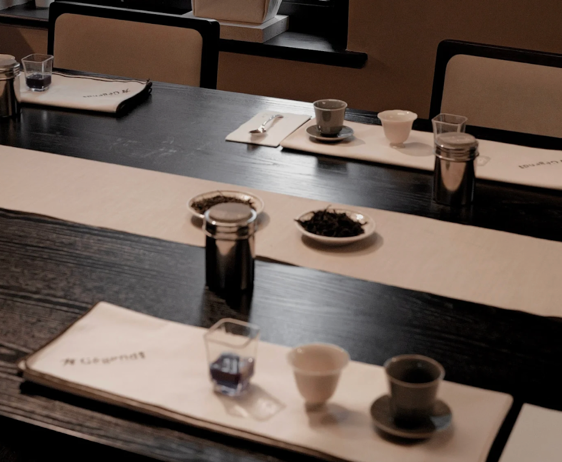
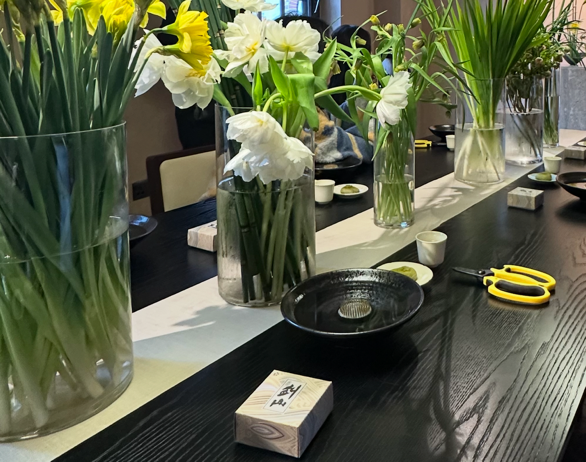
A long table placed at the entrance reflected these shifting functions. In February, Gégend collaborated with a flower shop in London to hold a Chinese-style flower arrangement workshop. I signed up for it and arrived late, by which time everything had been prepared. On an ordinary day, there would only be a few people sitting around the long table drinking tea, and there might be some teaware on display in the middle of the table (Figure 3). But on that day, every chair was occupied by people who came for the workshop. Also, the long table was filled with flowers and tools like scissors (Figure 4). The atmosphere on that day also differed from the ordinary days. People sitting around the table were all focusing on learning and creating, while customers were just drinking their tea on normal days. On that day, I experienced a temporary change in the space.
Likewise, I attended an opening ceremony for an art exhibition in Gégend in April. I heard loud conversation as I reached the door, instead of relaxing music. Opening the door, I found the small space was filled with people, and I could barely walk. Most attendees appeared to be white, and champagne, wine and glasses covered the long table. Moreover, the ‘ceremony’ was more like a large social event. People who had not met were introduced to each other and quickly formed a circle to chat while having a drink. After a while, with new introductions, the circle split up and new circles formed. I couldn’t feel the original peaceful and calm vibe of Gégend that night, which was replaced by a more energetic but chaotic atmosphere. Serena, a woman who had been working there for a long time, complained to me that she couldn’t stand this event in Gégend. Two other staff members also left the space for a while to take a break. Their reactions suggest clear expectations about how Gégend should feel. The event changed the atmosphere, but also exposed disagreement over which uses belonged in the space.
The objects within Gégend also served more than one purpose. On the first day I went to the space, I noticed flowers all over the space. But to my surprise, some of the flowers were in teaware (Figure 5). They looked coordinated, but they departed from my expectations of how teaware would be used. Gégend’s answer was, “It’s both a flower vessel and a tea vessel.” Hence, in Gégend, items are not fixed to their ‘innate’ usages. This was a practical repurposing of objects, which reinforced the space’s openness to different uses.
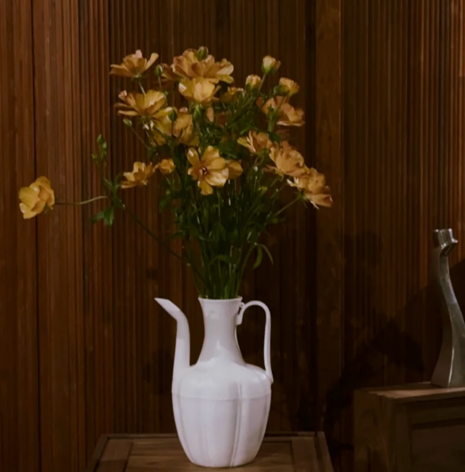
Gégend’s functions were not only shifting but sometimes overlapping or contradictory. On that day of the flower arrangement workshop, ordinary tea service continued elsewhere in the room. The simultaneous uses created friction. Because of the noise from the flower arrangement class, Emma had to apologise to other customers frequently. Meanwhile, during the workshop, a woman came in to drink tea. Unfortunately, all the seats were occupied due to the additional people at the workshop. She had to leave the space, and I could observe her dissatisfaction and disappointment. Here, one activity limited another customer’s access. Likewise, Gégend did not announce a closure for the opening ceremony mentioned above, so a group of friends came to the space to drink tea. They didn’t expect the scene and could only leave. These encounters made the space contested: accommodating one group could displace another. The problem was not simply uncertainty about what Gégend was, but competing demands on its limited space.
Multisensory Experiences
Despite the multiple functions examined above, most customers still came to Gégend to drink tea and eat snacks. Online posts by customers either showed tea drinking or included hashtags like “tea house” and “tea”. In an interview, Emma also recognised that, although tea should not be viewed as a central element of the space, it was a medium that could quickly introduce Gégend to most people. At the flower arrangement workshop, for example, green mochi had been prepared specifically for the event and served alongside green tea.
The procedure of brewing tea in Gégend was flexible rather than precisely standardised in the sessions I observed. First, the staff boiled a pot of water. Then, they placed tea leaves in a lidded teacup and poured in the boiling water. They did not use a clock to measure the time but combined personal experience with judgement to decide when the tea was ready. This allowed the preparation to vary, but variation alone did not make the procedure ambiguous or imply a lack of skill.
The sensory experience of drinking tea was harder to put into words. One day, Serena made me a cup of green tea, which was brought from Japan. She said that when drinking the tea, she could feel the tranquillity and dignity of Kyoto. However, what I felt was a matcha-like sweetness, and to this day, I cannot find the exact words to describe that feeling. Serena’s description associated the tea with a place, while mine focused on a flavour. As Zhang (2017) shows, taste can be difficult to record and describe. These differences suggest that the same tea need not evoke the same feelings in everyone who drinks it.
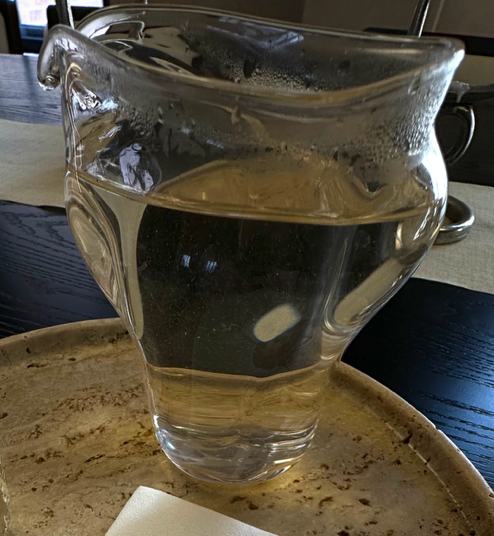
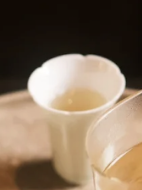
Drinking tea involved several sensory impressions, which sometimes overlapped. Gégend’s choice of vessels drew attention to different aspects of this experience. When a cup of tea was brought to me, its appearance was often the first thing I noticed. Different teas produced different colours. To enhance this sensory experience, Gégend used transparent glass for serving the tea (Figure 6). Lifting the cup towards my face brought its scent closer. For me, these aromas were delicate and sometimes difficult to identify. To amplify some of the more subtly scented teas, Gégend used narrow cups to hold the smell (Figure 7). As I sipped the tea, sight, smell and taste intertwined in ways that were difficult to separate in my experience. These small choices directed attention towards colour, aroma and flavour without determining how each customer would experience them.
The incense also affected how my friend and I experienced our tea. One day, I was drinking tea in the space with my friend. I was having a mild green tea while my friend was drinking a black tea. When the smoky incense was lit in the space, I could vaguely taste some of the smoke when I drank my tea again. I shared my experience with my friend, but he felt that his tea, which had had a smoky flavour, had become bland. We described contrasting effects in the same setting. This suggests that the sensory atmosphere was experienced differently, rather than producing a uniform feeling of calm.
Interactions and Relations
Being in the space also involved relationships with others. Customers interacted with the staff, who were often the founders themselves. Although these were commercial exchanges, the interactions at Gégend could feel friendly and personal. Emma told me that their idea was to make the space an ‘open lounge’ where every friend can come and take a rest to escape the busy urban life. When introducing the menu of tea or the whole space to customers, Emma was not acting like a professional explainer. Instead, she was more like your friend who was excited to show you her home. She had no set script for her introductions and was very casual, sometimes even chatting about her personal experiences. The distinction between owner and customer remained, but the informal style of hospitality softened it. Friendship was a way of describing the encounter, rather than proof that the commercial relationship had disappeared.
Interactions happened not only between customers and owners, but also among customers. On ordinary days, such interactions were sometimes less explicit. But during events or activities, like the flower arrangement workshop I attended (mentioned before), I noticed a quieter form of interaction between customers. After the teaching finished, every participant started arranging their flowers. Much of the work was done with little conversation, though I knew that some participants were friends. The shared task created a temporary rhythm: people worked individually, yet attended to what others were making. After a person had finished their work, all the attendees of the workshop cheered and congratulated them. After a period of praise, the group returned to quieter work. I experienced this alternation of concentration and encouragement as a form of intimacy. The situation was quite similar on a normal day for tea drinking. Although people were sitting in different corners tasting tea, the aroma of tea, music and incense that permeated the space contributed to a shared atmosphere. Whether everyone experienced this as a connection with others was harder to establish.
The social relations among those people who worked at Gégend also combined friendship, family ties and employment. Initially, I learned that Emma and Samuel, the two co-founders, had been friends before opening the space together. I also knew an employee who was the younger brother of Emma. Seeing founders and employees interact as friends, I assumed that all the employees were relatives or very long-time friends of the founders before working at Gégend. But Emma told me in an interview that “most of our employees become friends after working with us”. This corrected my initial assumption that friendship had always preceded employment. So, I asked Emma, “Does this intertwining of friendship and employment cause problems at work?” Emma answered that, fortunately, they were getting along fine so far. She felt that giving employees as much as the founders could, including shares, helped sustain these relationships. As the following discussion shows, however, this did not resolve every disagreement.
Operations and Plans
The overlap between friendship and work also raised questions about payment and ownership. According to Emma, Gégend did not have a clearly defined salary system, and most employees received shares rather than a regular salary because “it was still a start-up company”. However, there were different opinions about share ownership among the founders. One of the founders (name not shown due to privacy) told me that they were dissatisfied about giving employees shares, for they thought the labour provided by employees was replaceable, so that giving them shares would be unfair to those who had invested money. By contrast, another founder stood up for employees who felt unfairly treated and uncertain about not receiving a direct salary. This created a disagreement, and Emma admitted that the balance had not been found yet. As a result, the value and timing of future compensation remained uncertain. Here, clearer terms mattered because people disagreed about what counted as a fair return for their contributions.
Pricing raised a different tension. During my fieldwork, tea and snacks cost approximately £22 per person. In my informal comparisons, this was lower than prices at some other Asian tea venues in London. Emma told me that they were not making any profit from selling the tea and could only cover the basic costs. However, this price was still not affordable to everyone and sat uneasily with their initial idea – “providing a shelter for everyone in London”. In an interview, Freya also commented that “the price is reasonable, but I would rather choose to go to a cheaper Café in London”. I also saw two pairs of people leave the space before ordering, because they thought the price was too high. These encounters show a limit to the claim that “Gégend was designed as a temporary escape for everyone in London”: being open to the public did not mean being affordable to everyone.
The location presented another practical difficulty: finding the entrance. I’ve described my first experience going to Gégend in the introduction when I struggled to find the entrance. On the night of the exhibition opening, when many guests were visiting for the first time, I observed staff receiving at least five phone calls about the difficulty in finding the entrance. And this happened very often on ordinary days too, as employees often had to go downstairs to guide the customers. Emma also mentioned a lower online rating linked to the difficulty of finding the entrance. Thus, I asked Emma why they chose such a location. The first reason Emma gave me was that this ‘hidden’ location perfectly fit their idea of creating a space for temporary escape from urban life. I understood that. But her second reason was a little bit unexpected for me: “It would be fun to think of looking for Gégend as a process of treasure hunt!”, Emma said. For Emma, the search could become part of the attraction. Yet the calls for directions showed that the same feature could also create inconvenience.
When talking about the future, the founders’ plans remained open-ended. Among the two founders, Emma was the one who made big decisions. However, in a chat with Emma’s husband, he described Emma as courageous but without a clear plan. Scheduling sometimes took place only a day or two in advance. When talking about Gégend’s future development, Emma suggested many possibilities, like converting to a reservation-based private club or renting another floor, without a clear strategy.
Navigating Ambiguity and Opacity in Gégend
Despite these difficulties, Gégend was attracting attention. According to Emma, Gégend had stopped losing money and was breaking even. This was her assessment of the business, rather than a conclusion I could verify from financial records. Meanwhile, the posts about the space on social media platforms were circulating widely, with the most popular one I saw receiving nearly 4,000 likes. What, then, did openness contribute to the space’s appeal, and where did it create difficulties?
Some forms of ambiguity could be a resource at Gégend. In an interview with Freya, she told me that she enjoyed the feelings as a whole when tasting teas in that space. In addition, although she initially had difficulty finding the entrance, she described the search as exciting. For her, the attraction lay partly in an experience that exceeded any single function. The same small room could host tea drinking, flowers and art, while visitors could give different meanings to those encounters. In this sense, the space generated interpretive openness, and visitors’ interpretations helped shape what the space became.
Glissant’s claim that “The opaque is not the obscure” (1990, p. 191) helps clarify the distinction. His discussion of opacity resists reducing others to a framework that makes them fully transparent. I draw on this idea cautiously: Gégend need not be reduced to one cultural label or function for visitors to find meaning there. This does not mean that unclear working arrangements or inaccessible entrances are valuable in themselves. Opacity in interpretation and uncertainty in management have different consequences.
The conflicting uses of the room, the limits imposed by price, and uncertainty about compensation required more practical negotiation. Emma recognised the need for greater clarity in the business and hoped to achieve it over the following year. Thus, navigating ambiguity not only means keeping interpretation open, but also clarifying arrangements where uncertainty created exclusion, friction or insecurity.
Conclusion
In this paper, I have examined ambiguity and opacity at Gégend through observations, interviews and photographs. Its cultural meanings and changing uses left room for different interpretations. Sensory experiences were difficult to describe and varied between people, while friendly hospitality softened commercial relationships without removing them. Yet the evidence also reveals limits to openness: events could displace ordinary tea drinkers, prices constrained access, and arrangements for compensation remained unsettled. Gégend therefore suggests that some aspects of a space can remain open to interpretation while others need clarity. Its appeal did not depend on every visitor assigning it the same meaning, but its daily operation required decisions about access, use and payment. The question is which forms of openness sustain the space, for whom, and at what cost.
Reflection
I feel privileged to have the opportunity to conduct research at Gégend. Beyond the methodological limits discussed above, the research also calls for reflection on its time frame and on my own role. The period of observation was short. The space opened at the end of 2024, and my participant observation ran from February to April 2025. Hence, it’s hard for me to historicise its development or assess its longer-term transformation. Which uncertainties were temporary features of a new business, and which forms of openness might endure?
Second, I could not obtain permission to observe private hire events. These occasions restricted access in ways that differed from the public sessions I observed. Would the characteristics I observed during public opening hours also be evident at those events?
In addition, my positionality as an anthropology student sometimes affected the research. For example, I noticed that when I was interviewing the founders, they tried to use more ‘jargon’ to explain their ideas. Although they did not talk about these at the very beginning, they tried to summarise a sentence by using philosophical ideas, apparently to help with my ‘in-depth’ study. The interview situation partly shaped what they chose to tell me. Also, as an anthropology student, I often managed to analyse some symbolic actions among people, focusing on signs and symbols. My initial interest in ambiguity also risked making distinct experiences appear to express the same pattern. Attending to differences and disagreements is therefore essential to the analysis.
Finally, further research could examine how Gégend’s appeal relates to urban pressures and expectations of leisure and consumption. This would require a wider range of participants and comparisons beyond one space. My study raises these questions without claiming that Gégend represents a broader generation or era.
References
Glissant, É. (1990). Poetics of Relation. Ann Arbor Univ. Of Michigan Press.
Zhang, J. (2013). Puer tea : ancient caravans and urban chic. University Of Washington Press.
Zhang, J. (2017). Tasting Tea and Filming Tea: The Filmmaker’s Engaged Sensory Experience. Visual Anthropology Review, 33(2), 141–151. https://doi.org/10.1111/var.12132