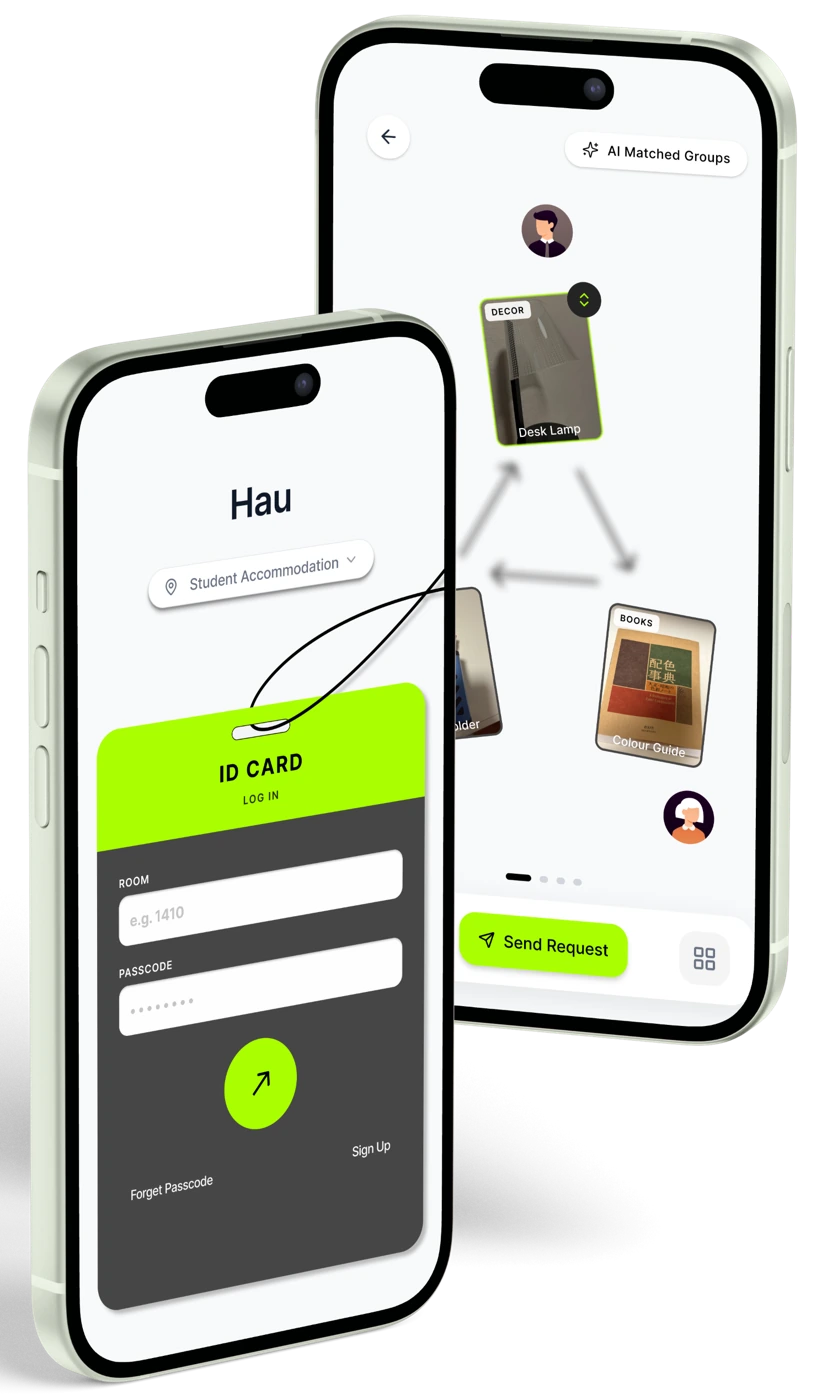
Hau
A student exchange platform that turns second-hand items into new social connections.一个学生闲置物品交换平台,让一次物品交换成为新关系的起点。
Students in UK commercial accommodation often feel isolated and alone.生活在英国商业学生公寓里的学生,常常感到孤单。
Inspired by Anthropologist Mauss’s discovery of ‘Hau’, that the social bond can be created through reciprocal exchanges, the project uses the need to exchange unwanted items as a social anchor to help residents build friendships.人类学家莫斯关于「Hau」的讨论启发了这个项目:互惠交换可以让人们建立社会联系。学生原本就有转手闲置物品的需要,Hau 借此为住户提供结识彼此的机会。
Blending a digital platform with shared spaces, Hau turns item exchange and group activities into repeated, low-pressure opportunities for lasting connections.Hau 将数字平台与公寓里的共享空间结合起来,通过物品交换和小组活动,让住户能在轻松的日常往来中反复见面,逐渐建立友谊。
Individual Project个人项目
Service Design / UI & UX Design / AI-Powered服务设计 / 界面与用户体验设计 / AI 辅助
Contents目录
Background项目背景
Personal Experience个人经历
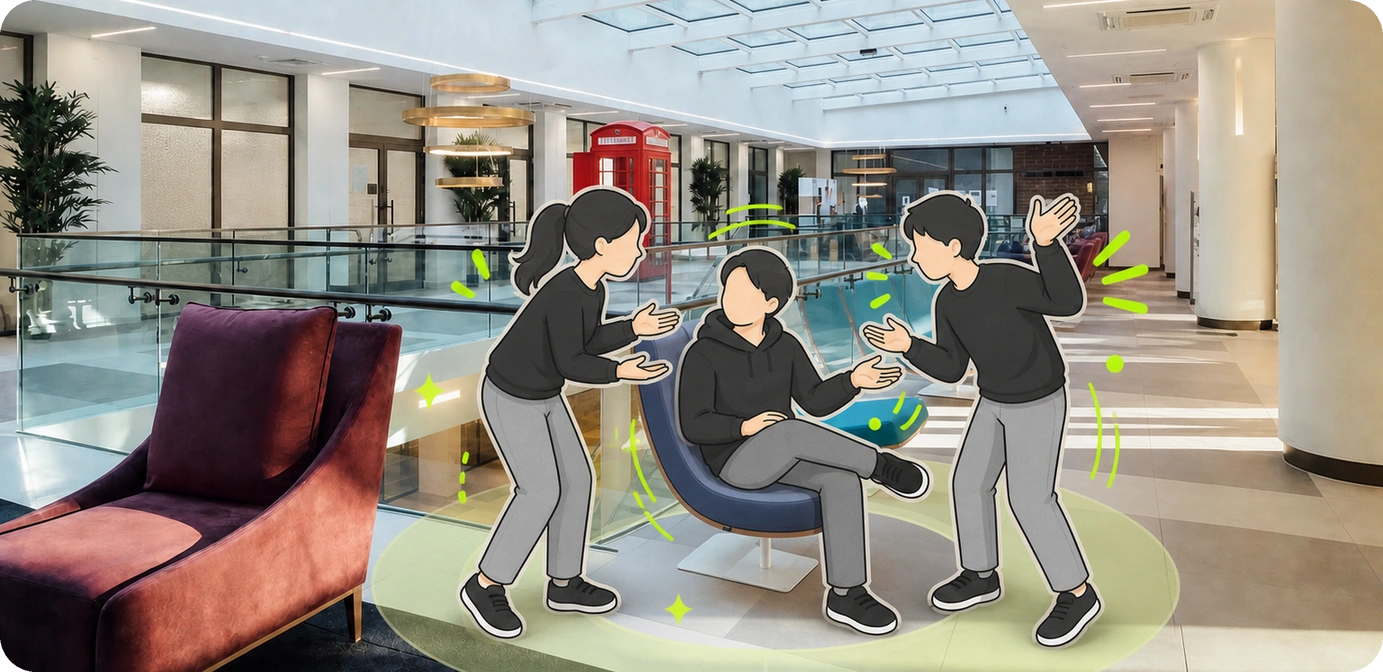
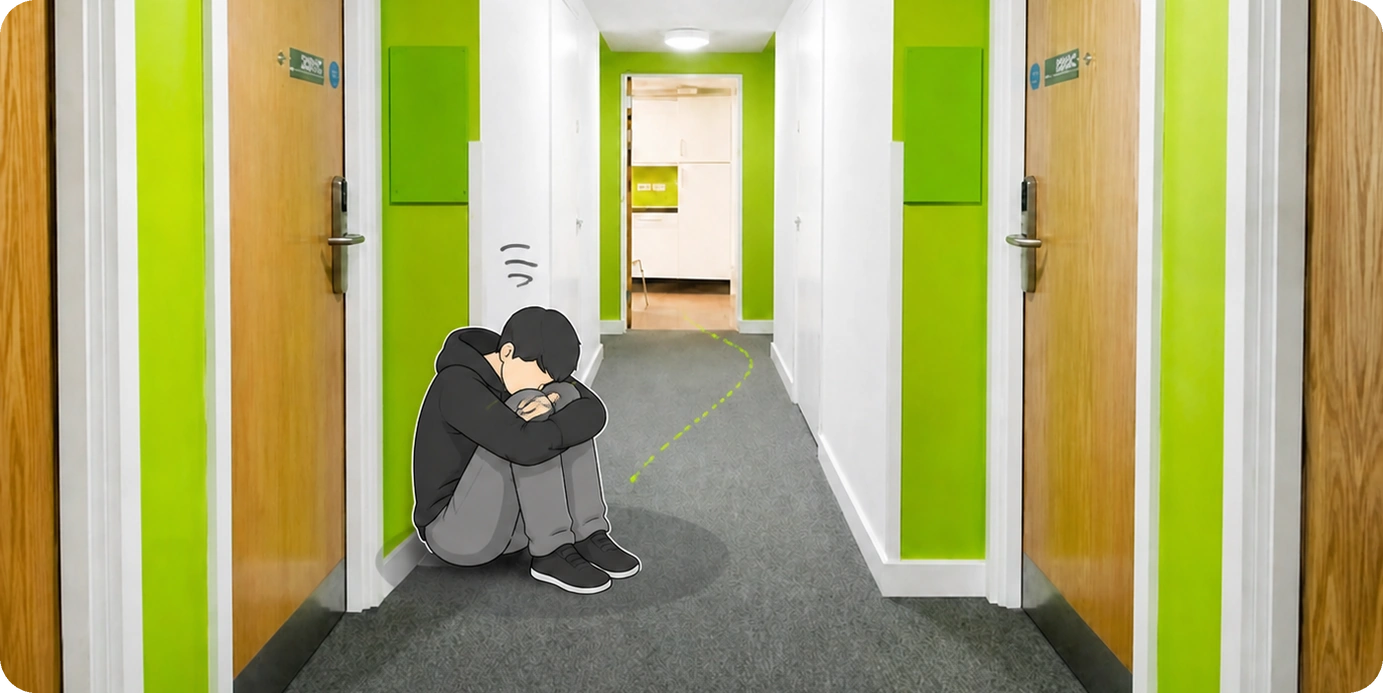
When I moved into a commercial student accommodation as an undergraduate in the UK, I immediately felt a difference from living in university halls.在英国读本科时,我从大学宿舍搬进商业学生公寓,立刻感受到了两种居住环境的差异。
Issue & Problem问题背景
A 2025 study by Accommodation For Students surveyed over 300 students from 99 UK universities regarding housing satisfaction.Accommodation For Students 于 2025 年就居住满意度调查了英国 99 所大学的 300 多名学生。
Satisfaction by housing type不同居住方式的满意度
- Living at home与家人同住
- 8.4 / 10
- University halls大学宿舍
- 7.6 / 10
- Private student halls私营学生公寓
- 6.4 / 10
Students in privately operated student accommodation reported the lowest satisfaction, with a lack of community being one of their main complaints.住在私营学生公寓的学生满意度最低,缺少社区感是他们反复提到的问题之一。
Research研究
Participant Observation参与式观察
Participant observation is an anthropological research method in which researchers immerse themselves in a community while observing and participating in everyday life.参与式观察是人类学的一种研究方法。研究者进入一个社区,通过观察和参与来了解人们的日常生活。
As a resident of both a university hall and a commercial student accommodation, I conducted one year of participant observation in each setting, engaging in everyday life to analyse and systematically reflect on residential experiences.我曾分别在大学宿舍和商业学生公寓居住,在两个环境中各进行了为期一年的参与式观察,从日常生活出发分析、反思学生的居住体验。
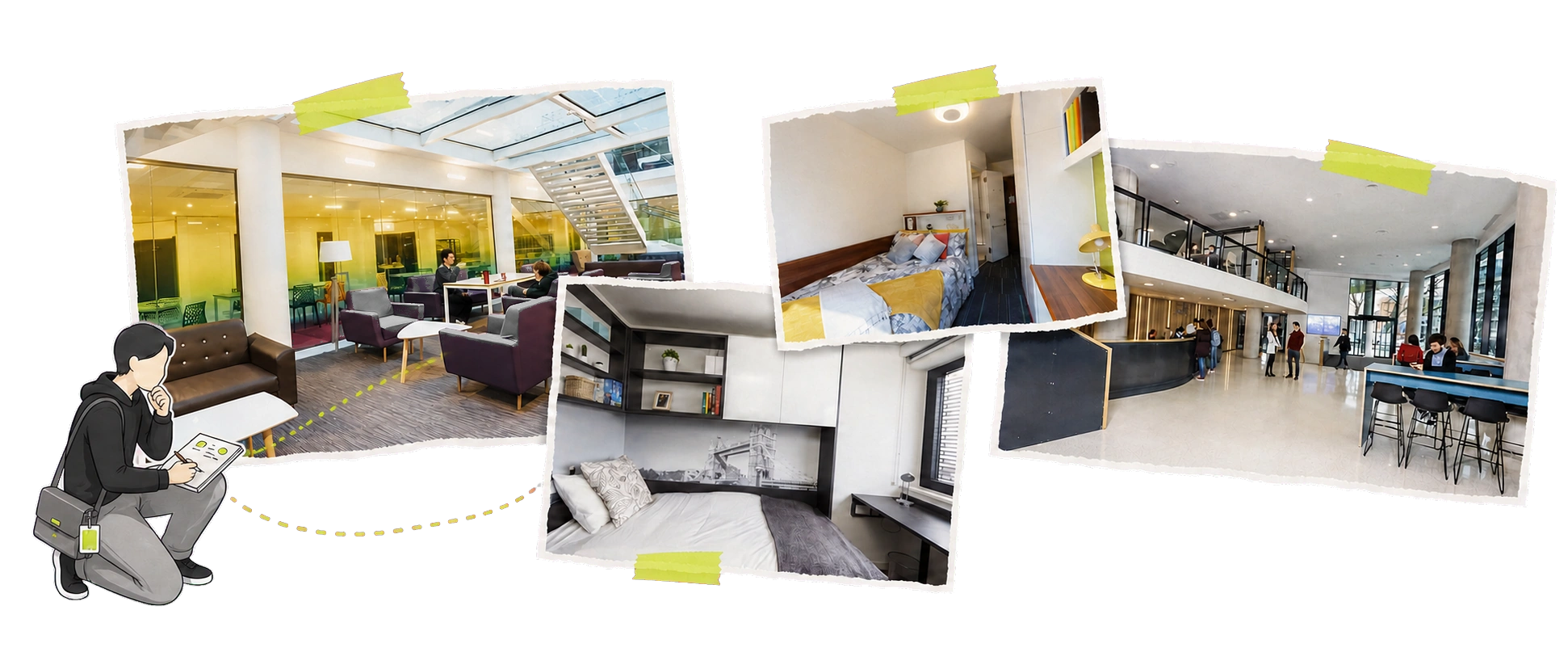
 University halls大学宿舍
 Commercial student housing商业学生公寓
Student identity学生身份
- University halls大学宿舍
- Residents from the same university; shared identity and experience; arrive with existing connections.来自同一所大学,有共同的身份和经历,入住前就有一定的人际联系。
- Commercial student housing商业学生公寓
- Residents from different universities; various identities and experiences; lack of previous connections.来自不同大学,身份与经历各异,入住前往往互不认识。


Shared spaces公共空间
- University halls大学宿舍
- Residents personalise shared spaces. Flexible for different activities. Spaces feel collectively owned.住户可以自行布置公共空间,用于不同的活动,感到这里属于大家。
- Commercial student housing商业学生公寓
- Personal items are quickly removed. Fixed functions of spaces. Spaces are professionally managed.个人物品很快会被清走,空间用途固定,由专业团队管理。


Service style服务方式
- University halls大学宿舍
- Staff know residents personally. Small events happen frequently. Warmer and cosier.工作人员熟悉住户,经常有小型活动,氛围更温暖亲切。
- Commercial student housing商业学生公寓
- Professional and standardised staffing. Fewer events and a focus on profit. More modern and impersonal.服务专业且标准化,活动较少,更注重盈利,环境现代但较少人情味。


User Research用户研究
Persona | Interview人物画像|住户访谈
During the period of my participant observation, I also interviewed three student residents living in UK commercial student halls.在参与式观察期间,我也采访了三位居住在英国商业学生公寓的学生。

Lin
18 · First-year undergraduate18 岁 · 大一学生
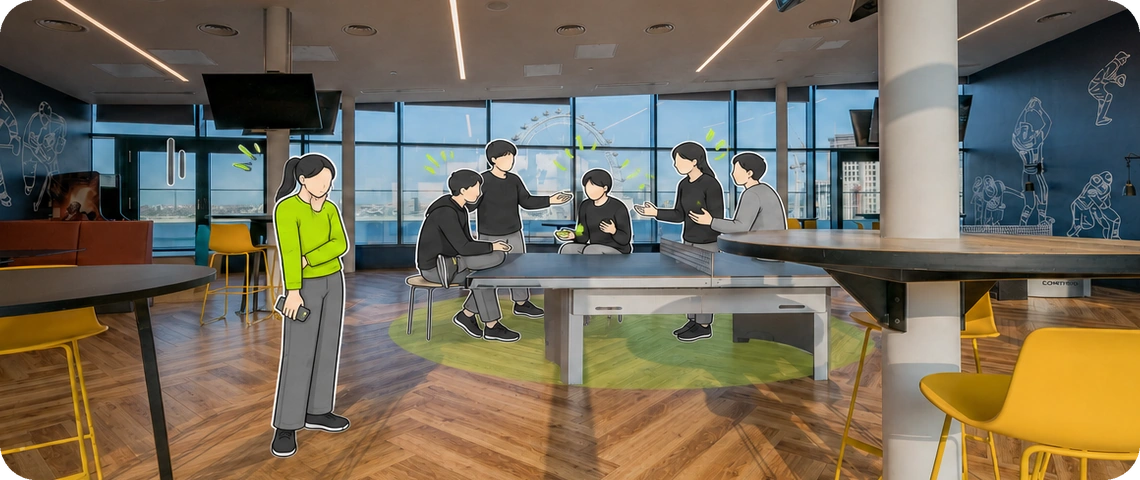
I enjoy socialising and attend most of the events in my accommodation. However, it’s hard to find people with shared hobbies, and the conversations rarely continue afterwards.我喜欢社交,公寓里的活动我大多都会参加。但要找到兴趣相投的人并不容易,活动结束后,我们也很少再聊下去。

Samuel
22 · Postgraduate student22 岁 · 研究生
I’m under a lot of academic pressure, but I’d also like to meet more people; unfortunately, the social activities at my flat take up too much of my time at the moment.我学业压力很大,但也想多认识一些人。可惜就目前来说,公寓里的社交活动太占时间了。

Freya
20 · Undergraduate student20 岁 · 本科生
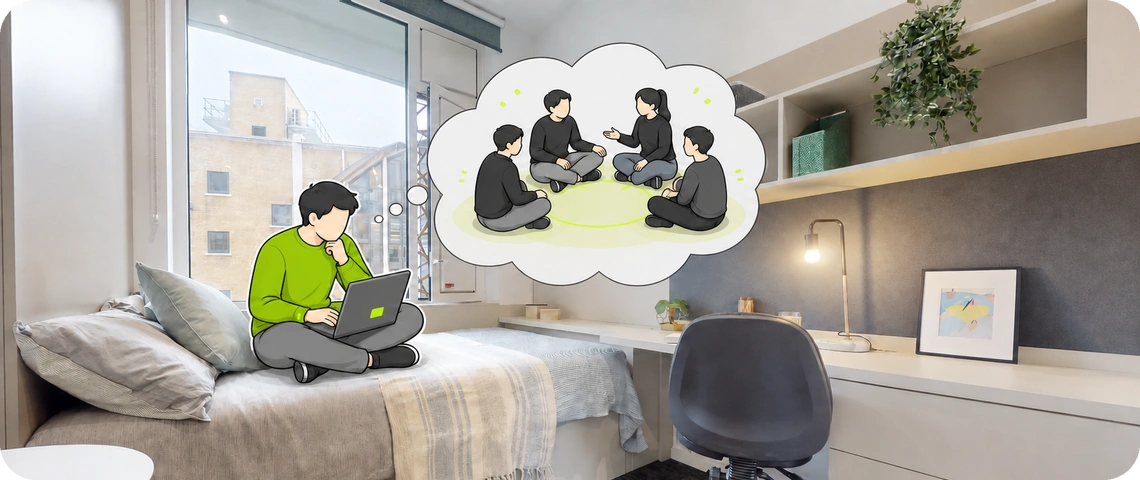
I’m too shy to initiate conversations, it would be better if I could have an excuse to chat with people naturally.我太害羞了,不太会主动搭话。如果有个由头,能自然而然地和别人聊起来就好了。
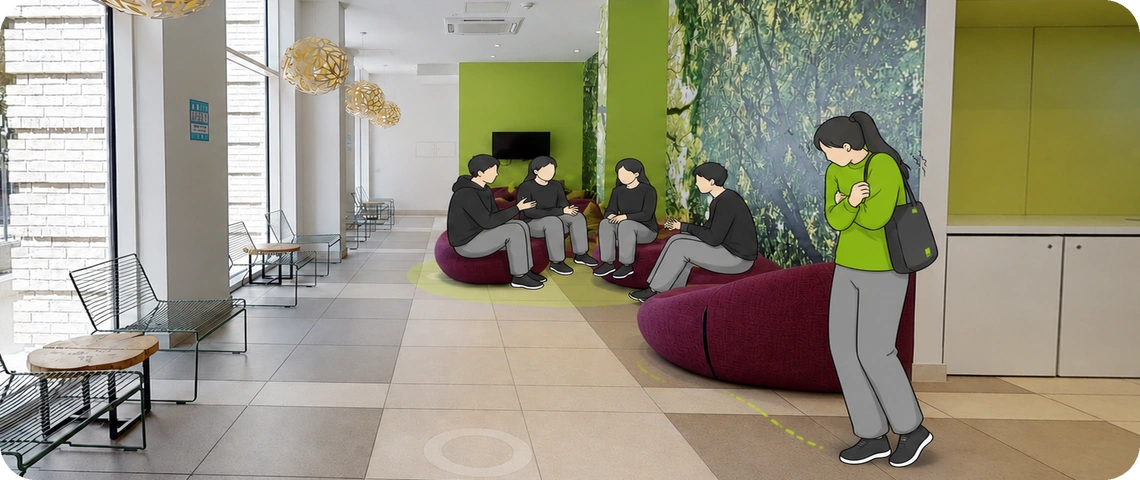
Survey Findings问卷结果
The questionnaire collected responses from 50 students living in four commercial student accommodations across London.问卷收集了伦敦四处商业学生公寓共 50 位学生的回答。
Want to meet more people希望认识更多人
Feel alone living in private halls住在私营学生公寓时感到孤独
What stops you from socialising?什么阻碍了你参与社交?
- Timing时间不合适
- 68%
- Too many people人数太多
- 61%
- Too formal形式太正式
- 54%
- Lack of events活动太少
- 37%
How often are shared facilities used?多久使用一次公共设施?
Who uses shared spaces together?和谁一起使用公共空间?
Students also need学生还需要什么?
- Save money省钱
- 40 / 50
- Mutual support互相支持
- 38 / 50
- Pass on unused items转让闲置物品
- 34 / 50
- Explore local community探索当地社区
- 29 / 50
Word Cloud of Students’ Interests学生兴趣词云
- Art艺术
- Gaming游戏
- Shopping购物
- Vintage复古物品
- Food美食
- Coffee咖啡
- Blind boxes盲盒
- Nightlife夜生活
- Collection收藏
- Fitness健身
- Fashion时尚
- Anime动漫
- Chat聊天
- Travel旅行
- Cooking烹饪
- Photography摄影
- Film nights电影之夜
- Volunteering志愿服务
- Live music现场音乐
- Study学习
- Books书籍
Discover调研发现
Commercial student housing provides modern facilities, but interactions remain limited. Organised events often feel formal, inconvenient or unrelated to students’ interests, while shared spaces are mostly used alone or with existing friends.商业学生公寓配有现代化设施,但住户之间的互动仍很有限。有组织的活动往往过于正式、时间不便,或与学生的兴趣无关。公共空间大多由学生独自或与已有的朋友一起使用。
Interactions remained infrequent, and opportunities for spontaneous and low-pressure communication were limited. Moreover, residents also need mutual support, shared resources, and opportunities to develop their interests.住户交流不多,自发、低压力的互动机会尤其有限。他们也需要相互支持、共享资源,以及发展兴趣的机会。
Anthropological Perspective人类学视角
Anthropologists have long studied reciprocity and how reciprocal exchanges can create stronger social connections. In The Gift, Marcel Mauss described the cycle of giving, receiving and reciprocating. He argued that the exchanged item carries a social relationship with it and creates a reason for future interaction.人类学家长期研究互惠,以及交换如何强化社会联系。马塞尔·莫斯在《礼物》中描述了给予、接受与回礼的循环。他认为,被交换的物品携带着社会关系,也为未来的互动创造了理由。
Drawing on a Māori account, Mauss interpreted “Hau” — the spirit of the gift — as the continuing force that connects a gift to its source.依据一则毛利人的叙述,莫斯把「Hau」(礼物之灵)理解为一种持续的力量,将礼物与它的来源联系在一起。


Insight设计洞察
- Problem问题
Residents in UK commercial halls feel isolated.英国商业学生公寓的住户感到孤立。
- Medium媒介
Students’ needs and interests学生的需求与兴趣
- Solution解决方向
A service system that fosters natural interaction through exchanging unused items.通过交换闲置物品,让住户自然产生互动的服务系统。
Product Research产品研究
Competitor Analysis竞品分析
I compared social, niche-community, and second-hand trading products to understand how each supports connection, community, and exchange.我比较了社交、兴趣社区和二手交易产品,了解它们各自如何支持人际联系、社区参与和物品交换。
 Tinder |   Qiandao / POP MART |  eBay | |
|---|---|---|---|
| Function功能 | Users browse profiles, express interest and chat after a mutual match.用户浏览资料、表达兴趣,双方匹配后才能聊天。 | Trending Gen Z interests, where users discover collectibles and share their interests.围绕 Z 世代的热门爱好,用户发现收藏品、分享兴趣。 | Users buy and sell second-hand items through listings, bidding and direct purchases.用户通过发布商品、竞拍与直接购买进行二手交易。 |
| Strengths优势 | Fast match discovery; mutual consent before conversation; low-pressure connection initiation.快速发现匹配对象,交流前双方先达成意愿,建立联系的压力较小。 | Shared interests; niche community; playful and emotional.共同兴趣、细分社群、趣味与情感体验。 | Credit system and supervision; fair price and trading process; clear item listings.信用与监管机制、公平的定价和交易流程、清晰的商品信息。 |
| Opportunity Gaps机会缺口 | Mostly one-to-one interaction; appearance-first matching; high security risk.以一对一互动为主,匹配偏重外表,安全风险较高。 | Fewer opportunities for social discovery; consumption-driven participation.认识新朋友的机会较少,参与由消费驱动。 | Limited social connection; money-based transaction.社会联系有限,交易以金钱为基础。 |
| Applied Insights设计借鉴 |
Initial Concept初步概念
A service system that helps relationships form naturally through item exchange. Match online, interact offline.通过物品交换让关系自然形成的服务系统。线上匹配,线下互动。
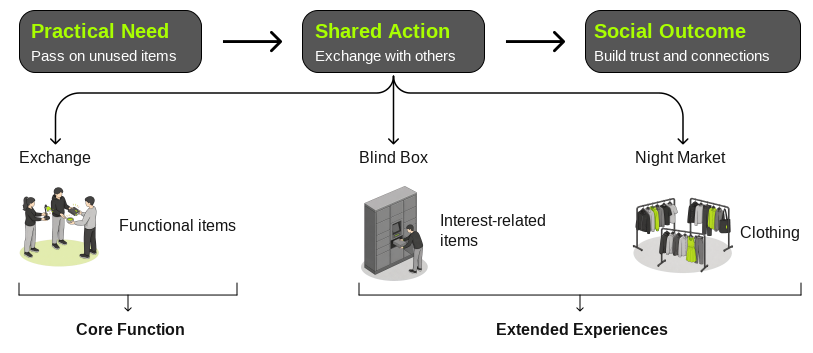
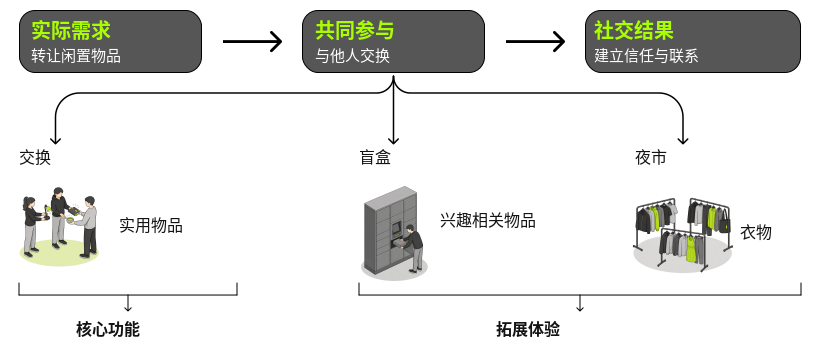
Concerns & Solutions用户顾虑与设计回应
Online线上
User concerns用户顾虑


Our solutions设计回应
A match is only successful if everyone agrees.只有所有人都同意,匹配才成立。
Users can choose not to share contacts with others.用户可以选择不向他人公开联系方式。
Offline线下
User concerns用户顾虑


Our solutions设计回应
Only residents can register; all interactions happen in public spaces.只有住户可以注册,所有互动都在公共空间中进行。
The credit system acts as a disciplinary measure.以信用机制约束爽约行为。
Mission & Vision使命与愿景
An unused-item exchange ecosystem that transforms unwanted items into meaningful connections, helping students reduce waste and feel a stronger sense of belonging. This system is inspired by reciprocal relationships, hence the name “Hau”.建立闲置物品交换生态,让不再需要的物品成为有意义的联系,帮助学生减少浪费、增强归属感。系统的灵感来自互惠关系,因而得名「Hau」。
Interactive Structure交互结构
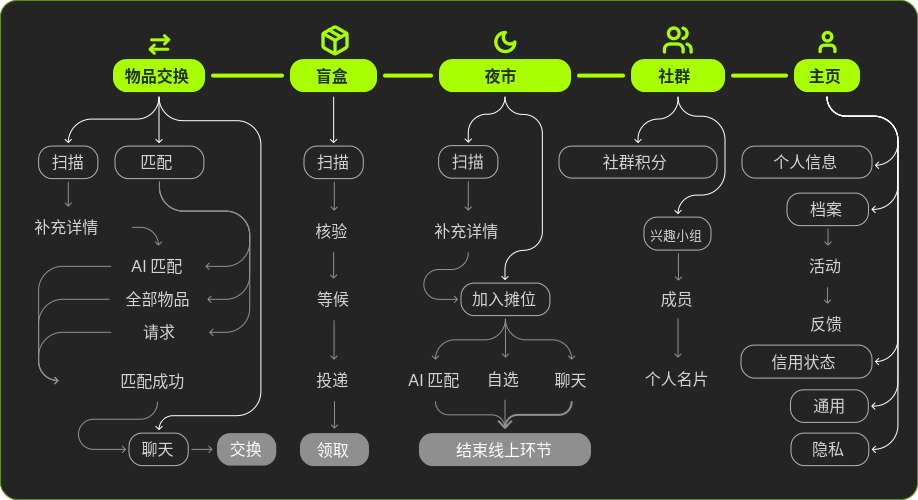
APP User FlowApp 用户流程
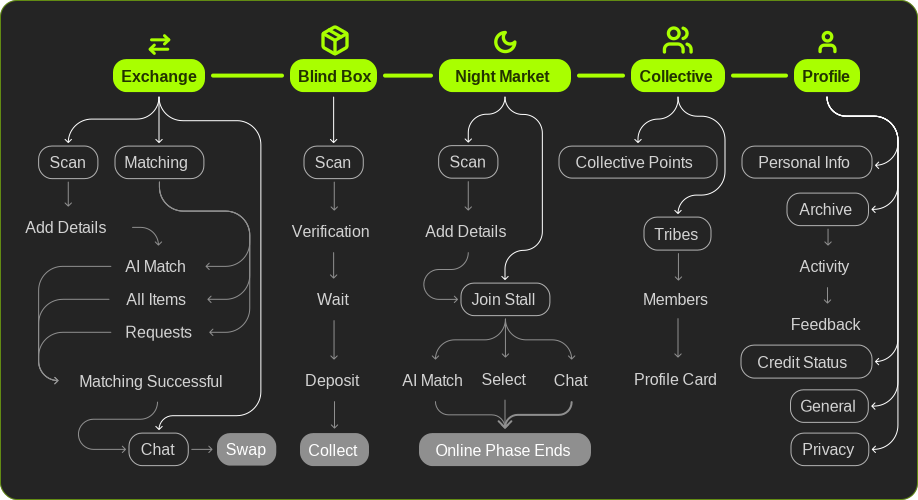
UI Wireframe界面线框图
















Service Blueprint服务蓝图
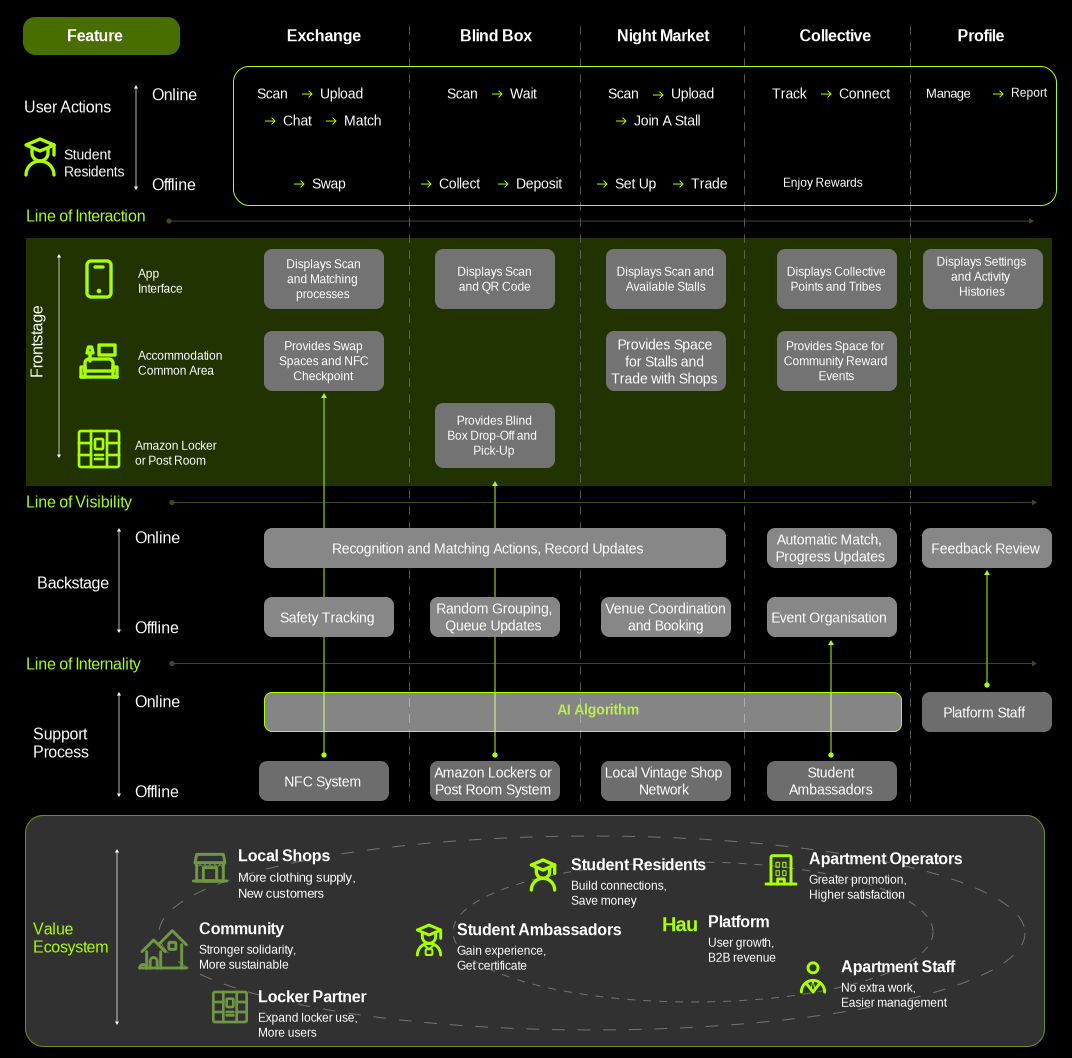
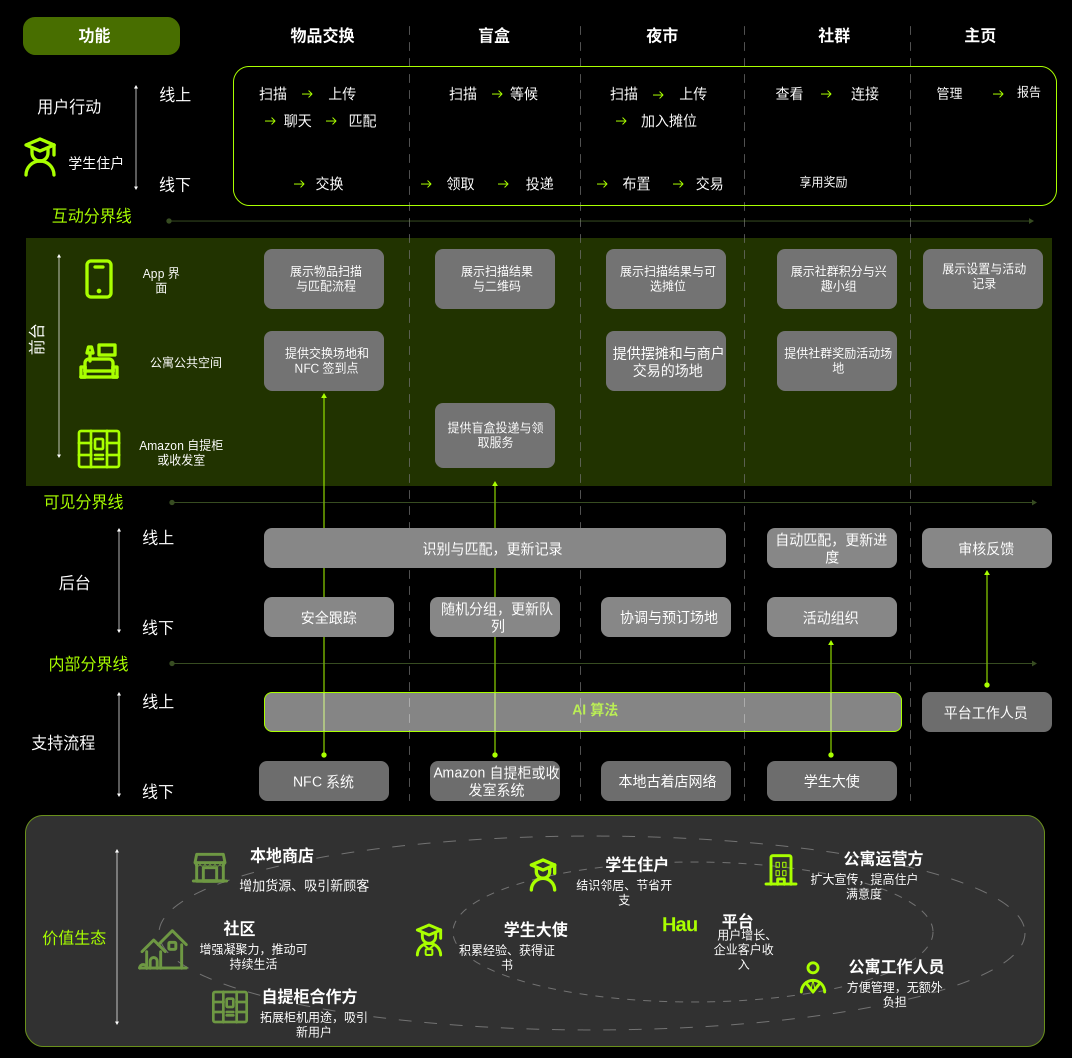
Service System Map服务系统图
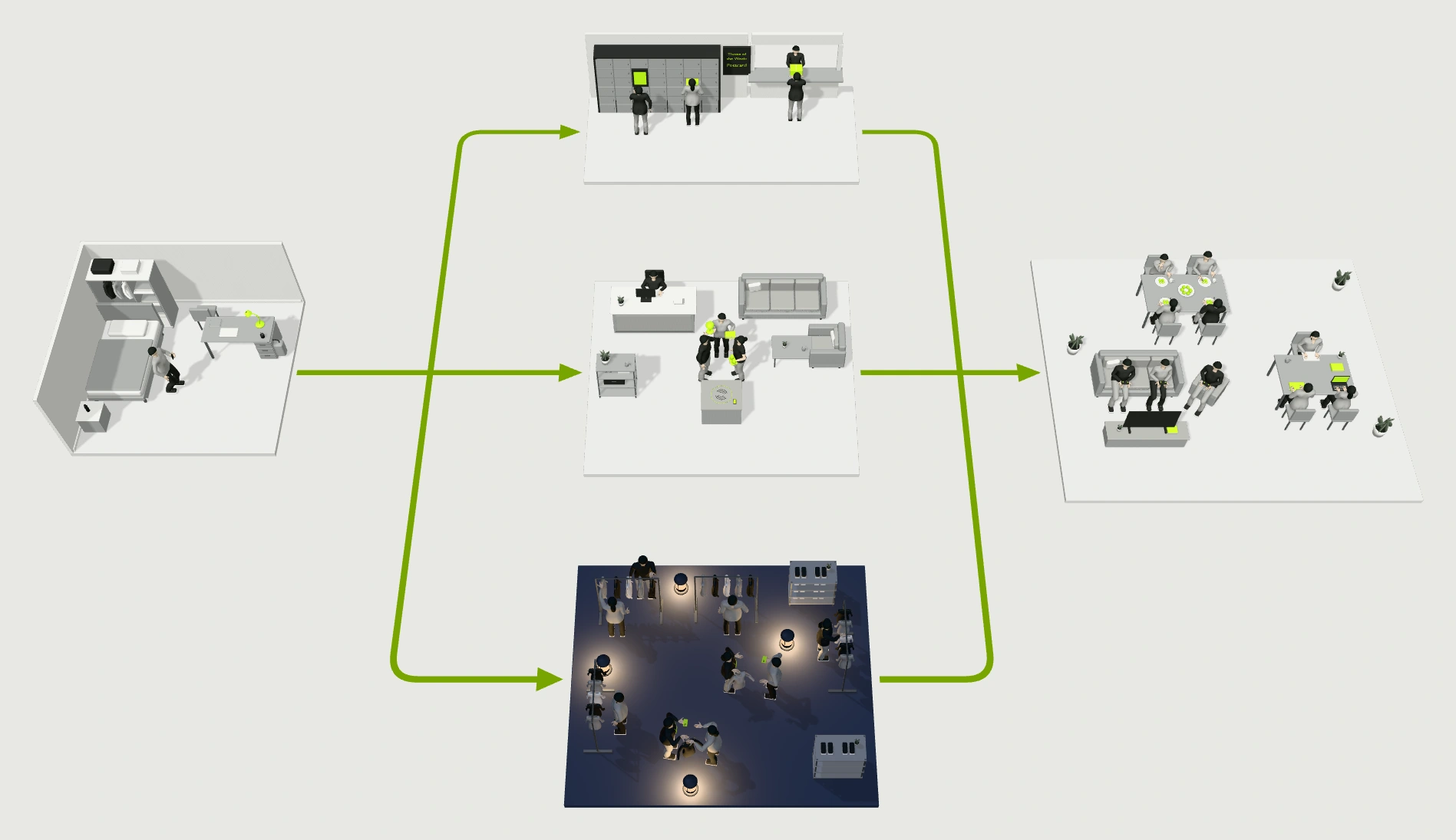
A connected service journey combining digital coordination and physical interaction to build trust, participation and belonging among student residents. It transforms everyday item exchange into opportunities for social connection.一段连接线上协调与线下互动的服务旅程,在学生住户之间建立信任、促进参与并形成归属感。让日常的物品交换,成为建立社会联系的机会。
Outcome设计成果
High-Fi高保真
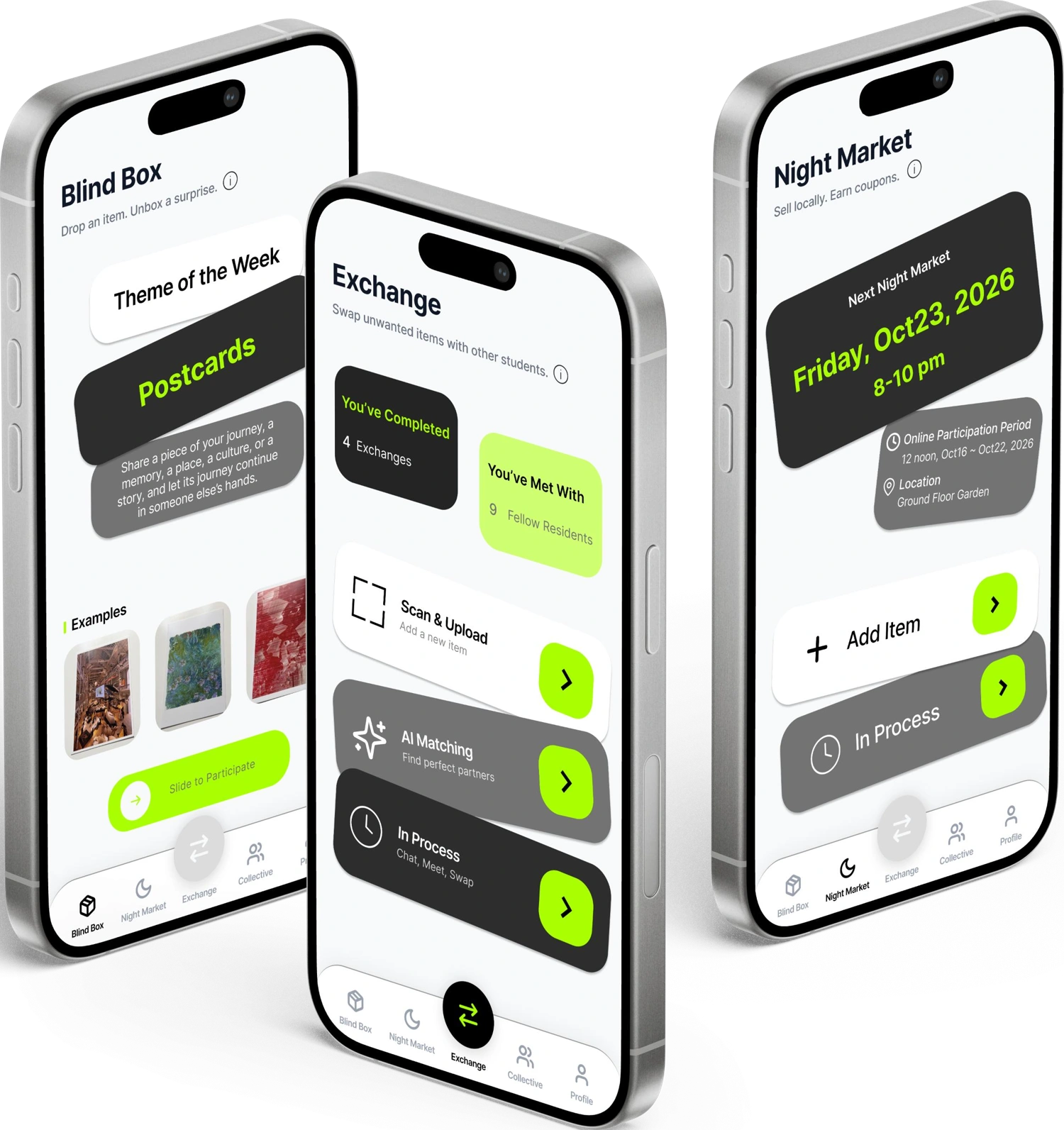
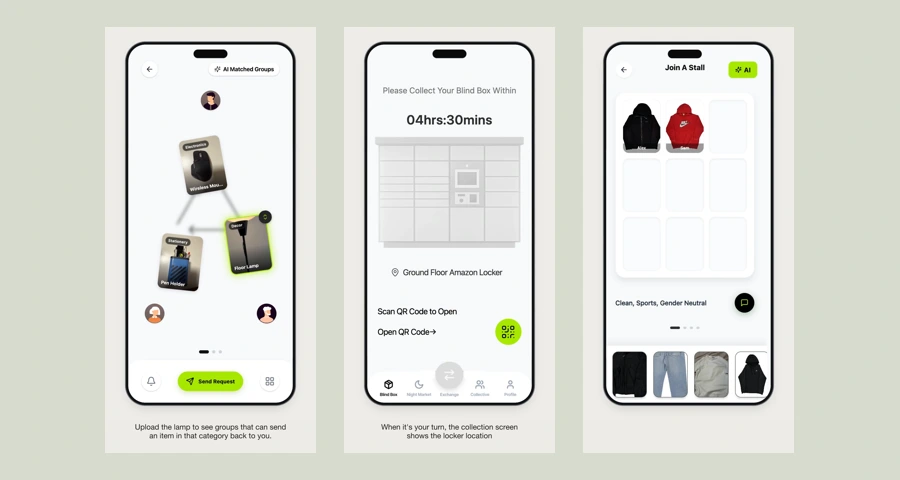
Blind Box盲盒
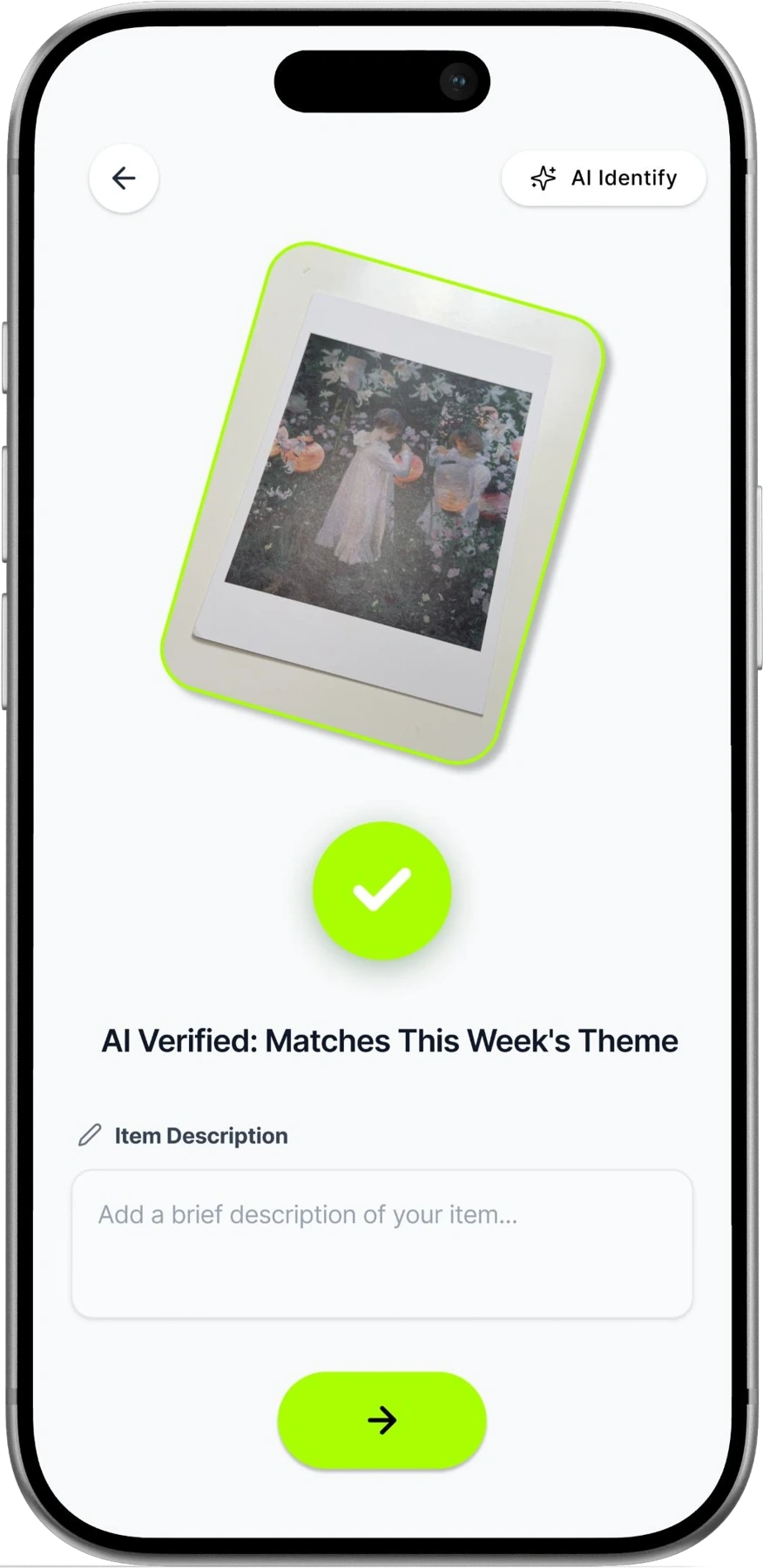
Uploaded item is AI-verified against the week theme.AI 核验上传的物品是否符合本周主题。
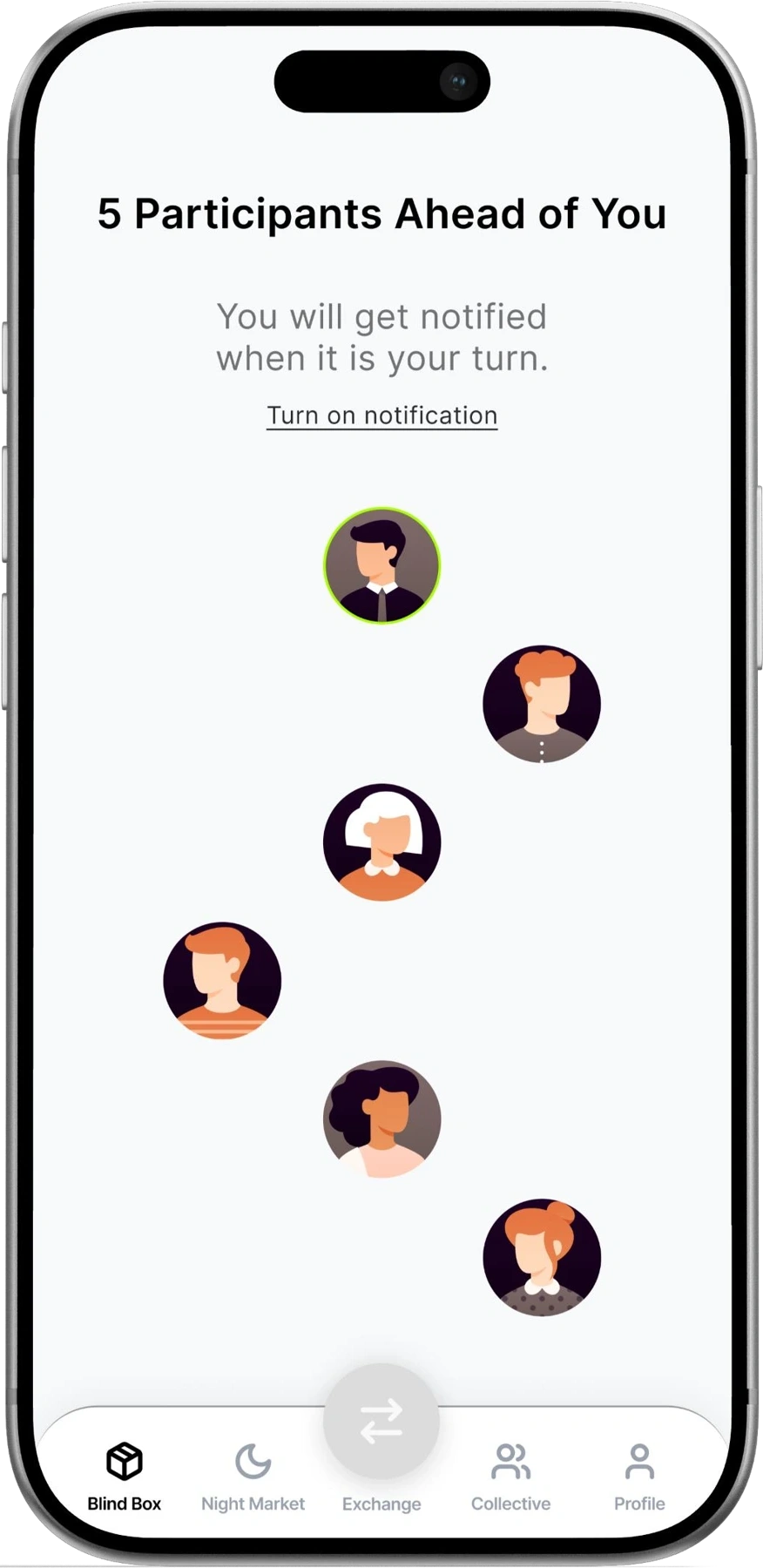
User joins the queue due to limited storage capacity.储物空间有限,住户需要排队等候。
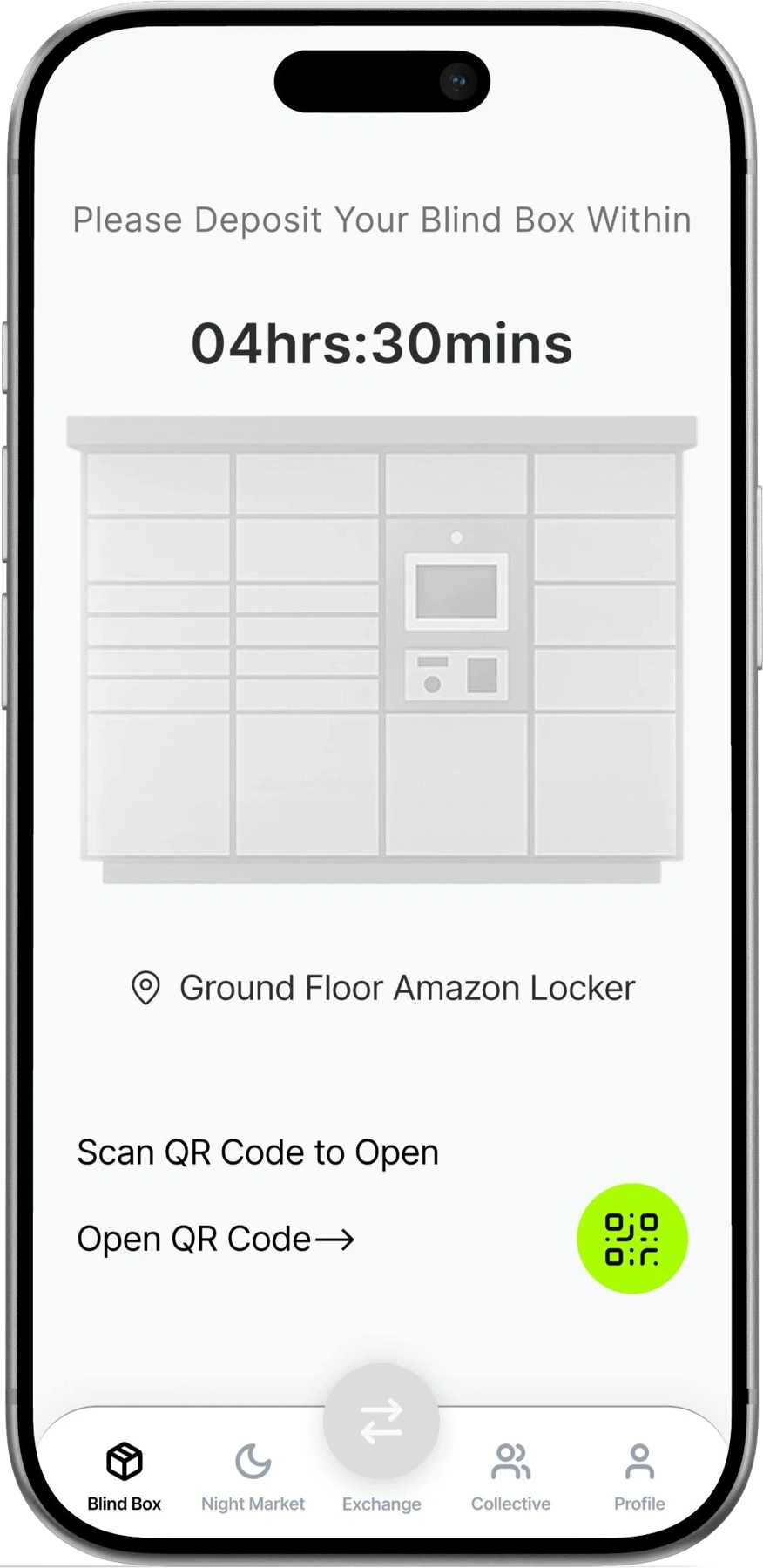
Follow the guidance to deposit/ collect items.按指引存入或领取物品。
Uploaded item is AI-verified against the week theme.AI 核验上传的物品是否符合本周主题。
User joins the queue due to limited storage capacity.储物空间有限,住户需要排队等候。
Follow the guidance to deposit/ collect items.按指引存入或领取物品。
Exchange物品交换
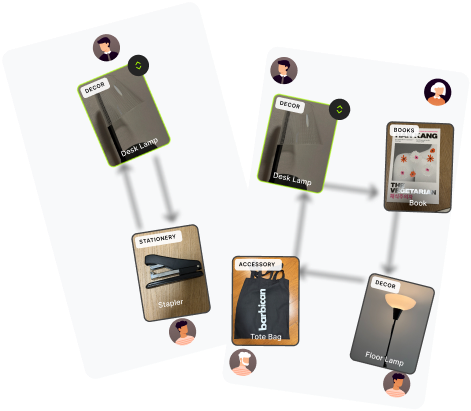
AI forms 2,3 or 4 user groups based on item categories and preferences to maximise successful matches.AI 根据物品类别与住户偏好,组成二至四人的交换小组,提高匹配成功率。
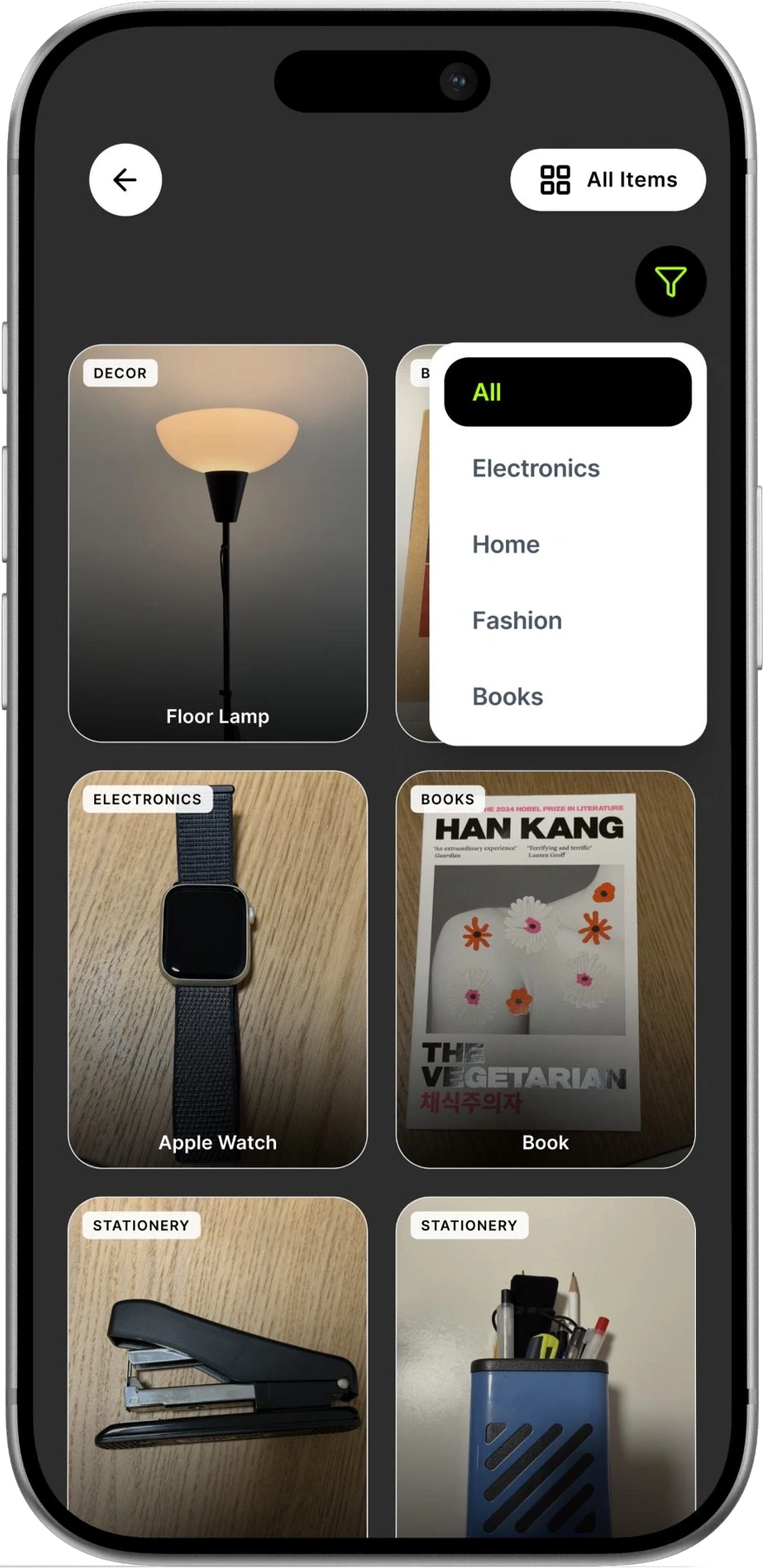
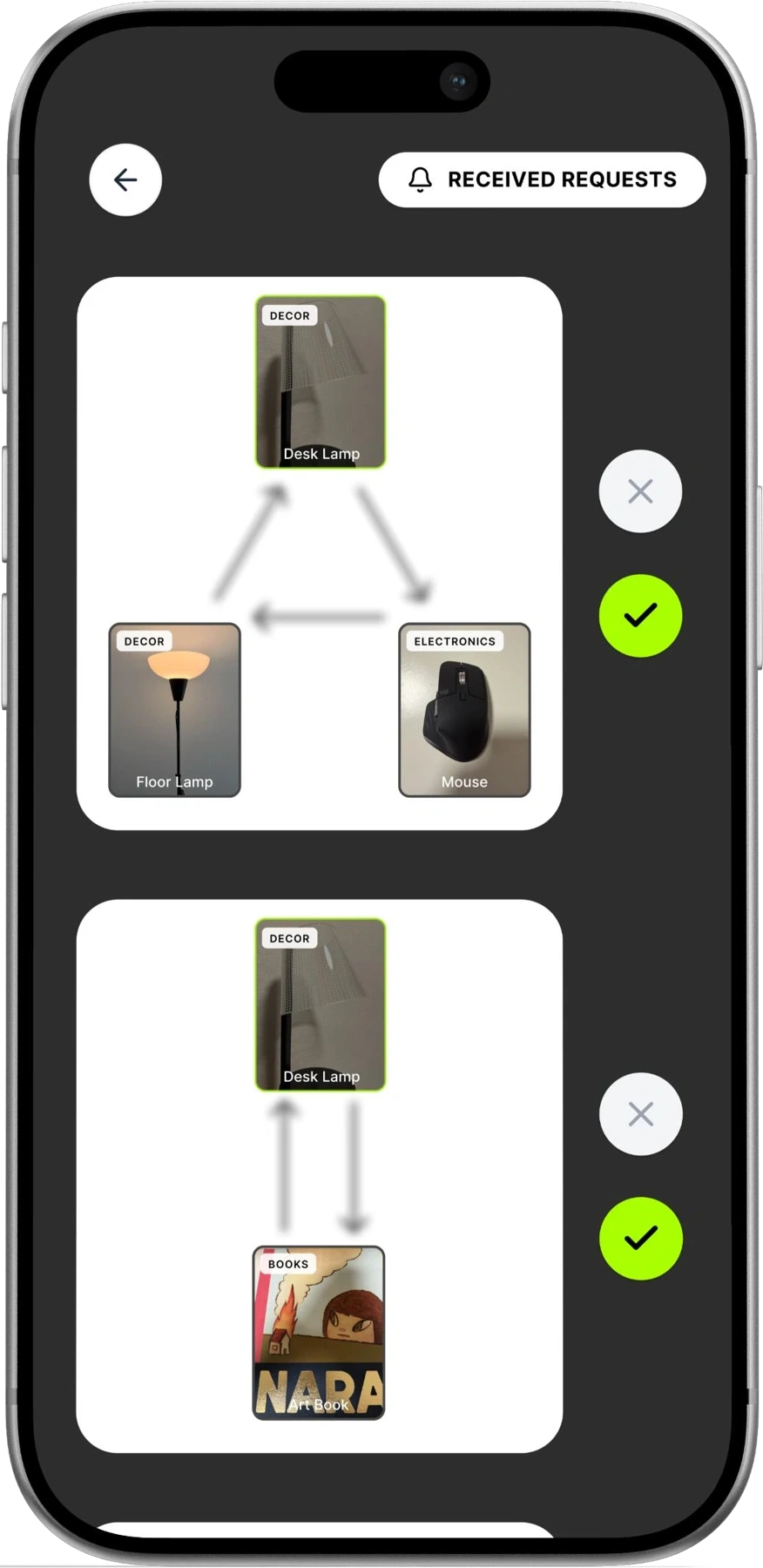
User can browse all available items or review received match requests.住户可以浏览所有闲置物品,也可以查看收到的匹配请求。
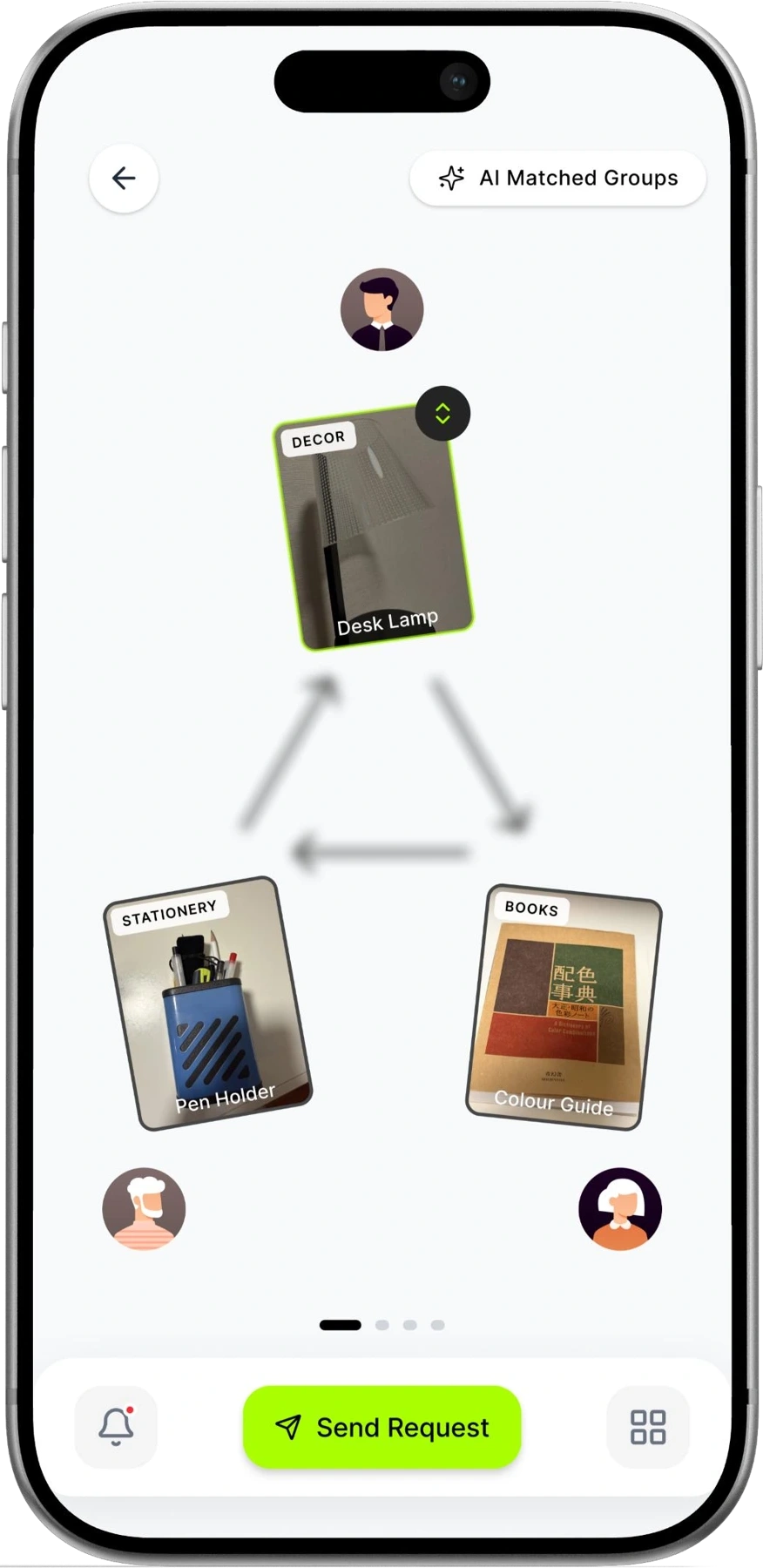


Swipe Left/ Right to view more groups左右滑动查看其他交换小组
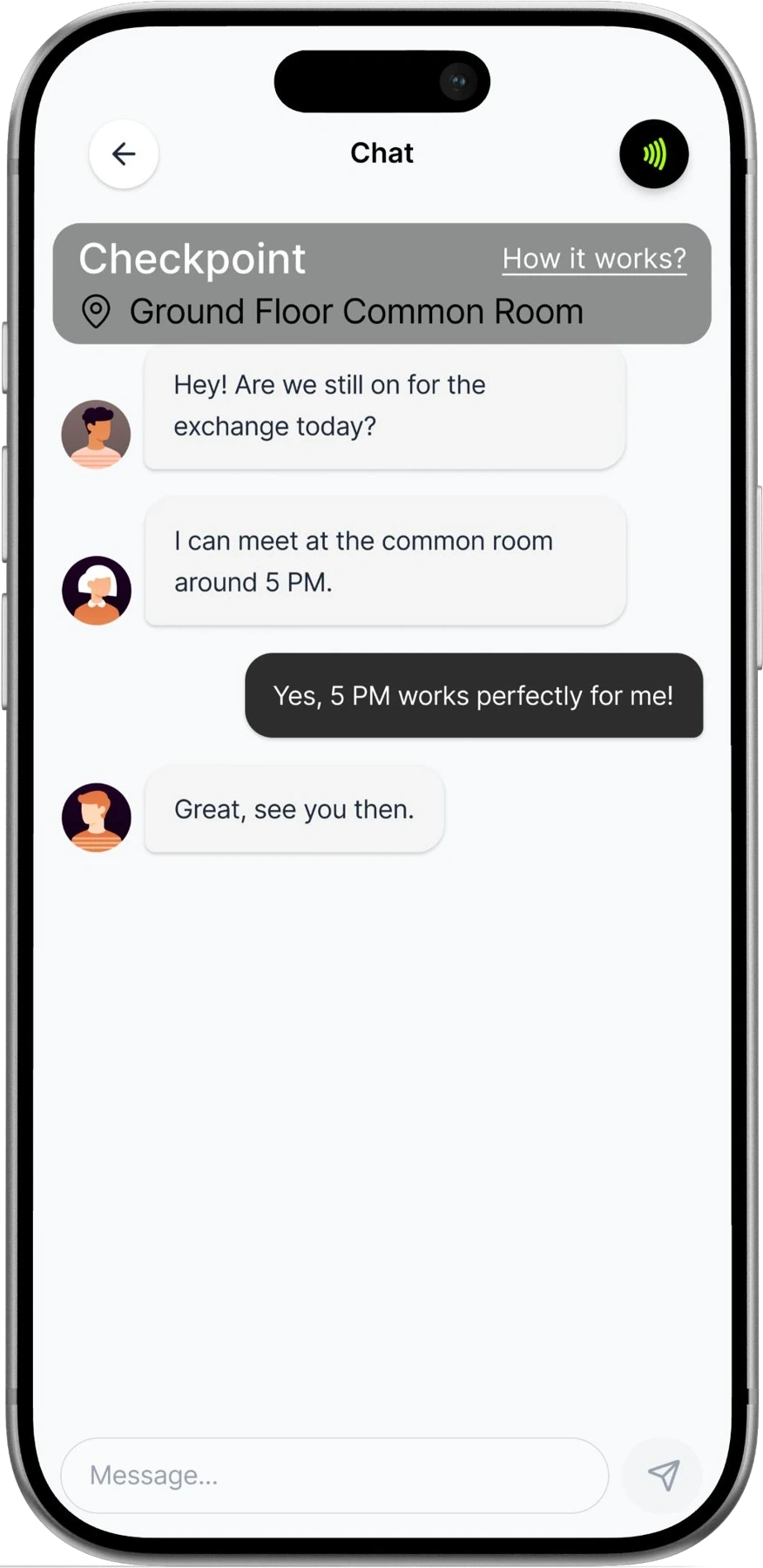
Chat and coordinate after matched.匹配后,在群聊中协调交接。
Once everyone touches the NFC, the swap is completed.所有人完成 NFC 签到后,交换完成。
AI forms 2,3 or 4 user groups based on item categories and preferences to maximise successful matches.AI 根据物品类别与住户偏好,组成二至四人的交换小组,提高匹配成功率。
User can browse all available items or review received match requests.住户可以浏览所有闲置物品,也可以查看收到的匹配请求。
Swipe Left/ Right to view more groups左右滑动查看其他交换小组
Chat and coordinate after matched.匹配后,在群聊中协调交接。
Once everyone touches the NFC, the swap is completed.所有人完成 NFC 签到后,交换完成。
Collective社群
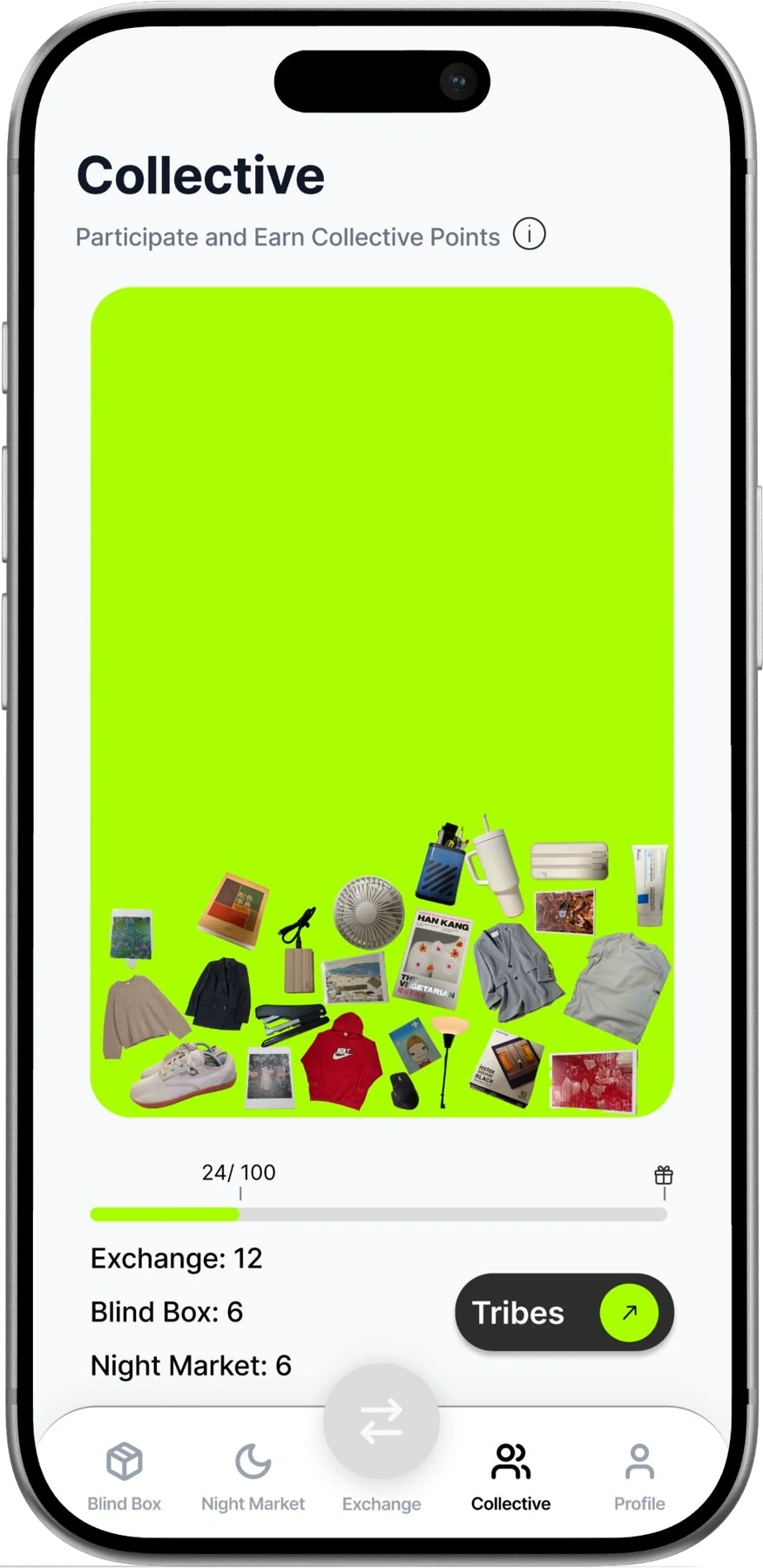
Every item contributes to a collective progress visual, unlocking rewards at milestones.每件物品都会计入社群进度,达到里程碑即可解锁奖励。
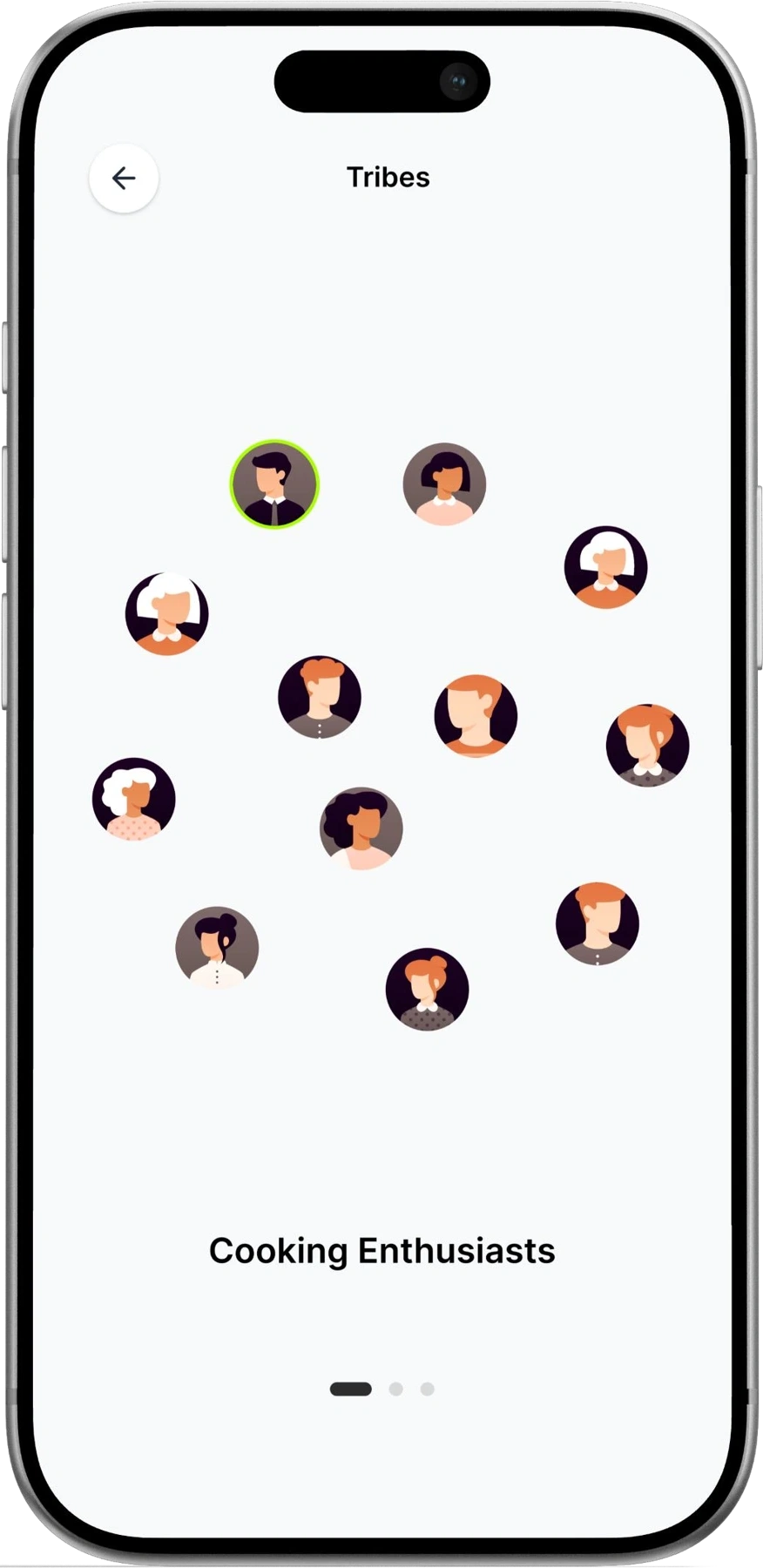
Find like-minded friends based on activity data.根据共同的活动经历找到同好。
Click the avatar to view more.点按头像查看资料。
Every item contributes to a collective progress visual, unlocking rewards at milestones.每件物品都会计入社群进度,达到里程碑即可解锁奖励。
Find like-minded friends based on activity data.根据共同的活动经历找到同好。
Click the avatar to view more.点按头像查看资料。
Night Market夜市
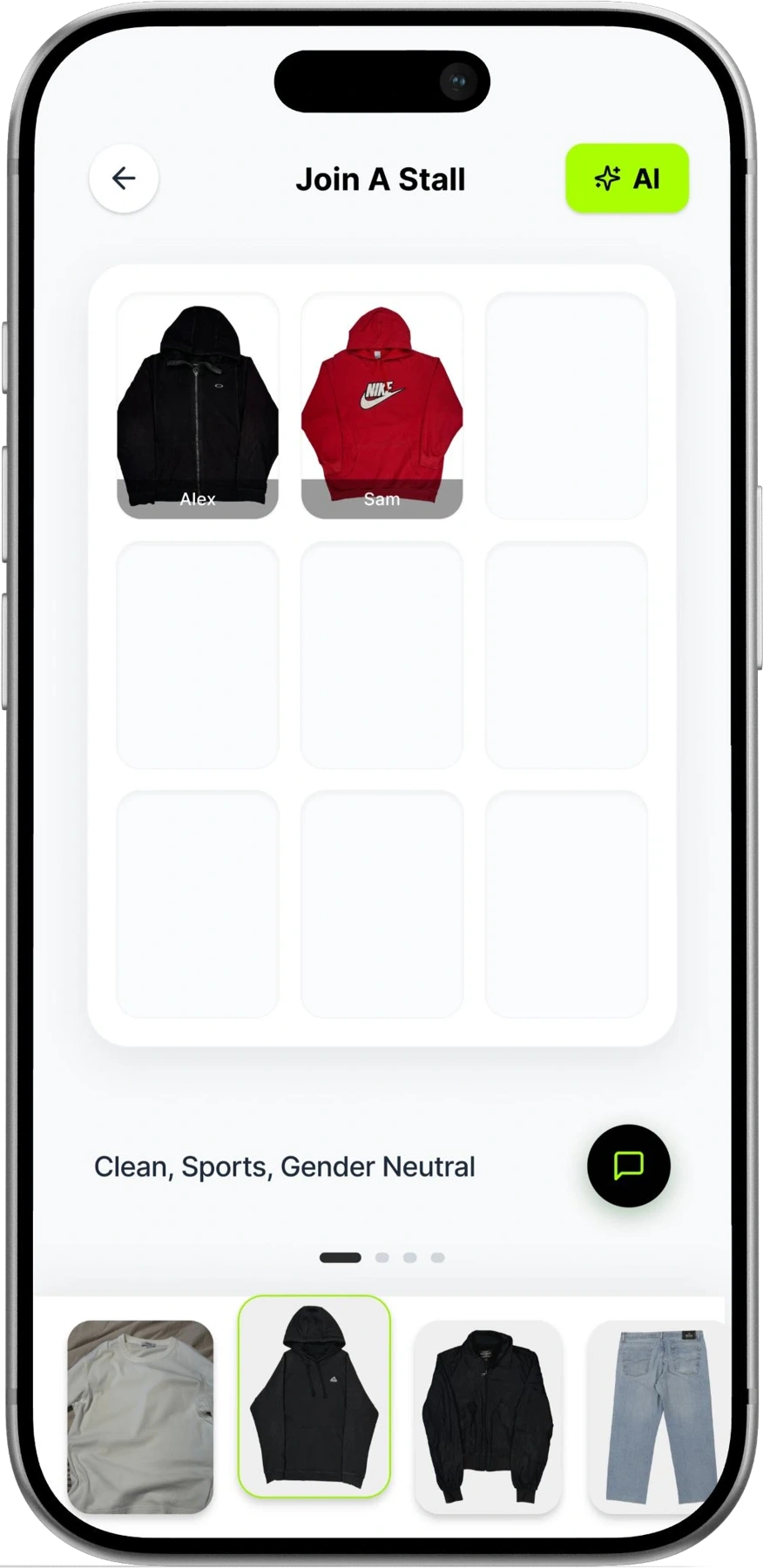
Click to automatically match a stall.点按即可自动匹配摊位。
Join stall chat to coordinate.加入摊位群聊进行协调。
Drag ‘your’ clothing into/ out a stall to join/ remove from it.将自己的衣物拖入摊位即可加入,拖出即可移除。


Click to automatically match a stall.点按即可自动匹配摊位。
Join stall chat to coordinate.加入摊位群聊进行协调。
Drag ‘your’ clothing into/ out a stall to join/ remove from it.将自己的衣物拖入摊位即可加入,拖出即可移除。
App WalkthroughApp 使用教程
English audio · 4 min 44 sec英文讲解 · 4 分 44 秒
Vibe Coding ProcessVibe coding 开发过程

The frontend interactions were built using vibe coding.前端交互通过 Vibe coding 实现。
Initial high-fidelity UI in Figma Make在 Figma Make 搭建高保真界面

Refined in Figma Design在 Figma Design 细化设计

Front-end interactions built with Codex用 Codex 实现前端交互

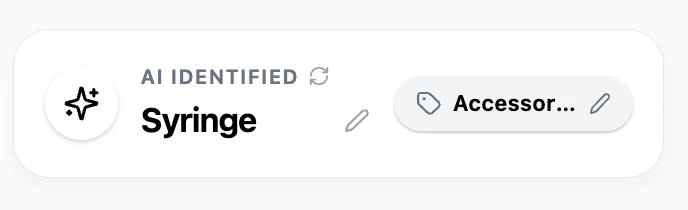
Inaccurate AI Item RecognitionAI 物品识别不准确


Replaced generic local classifiers with Gemini Vision. A cropped image and constrained prompt improved item naming and mapped results to a fixed category library.使用 Gemini Vision 替代通用本地分类器。裁剪图像并限制提示词,改善物品命名,将结果映射至固定类别库。
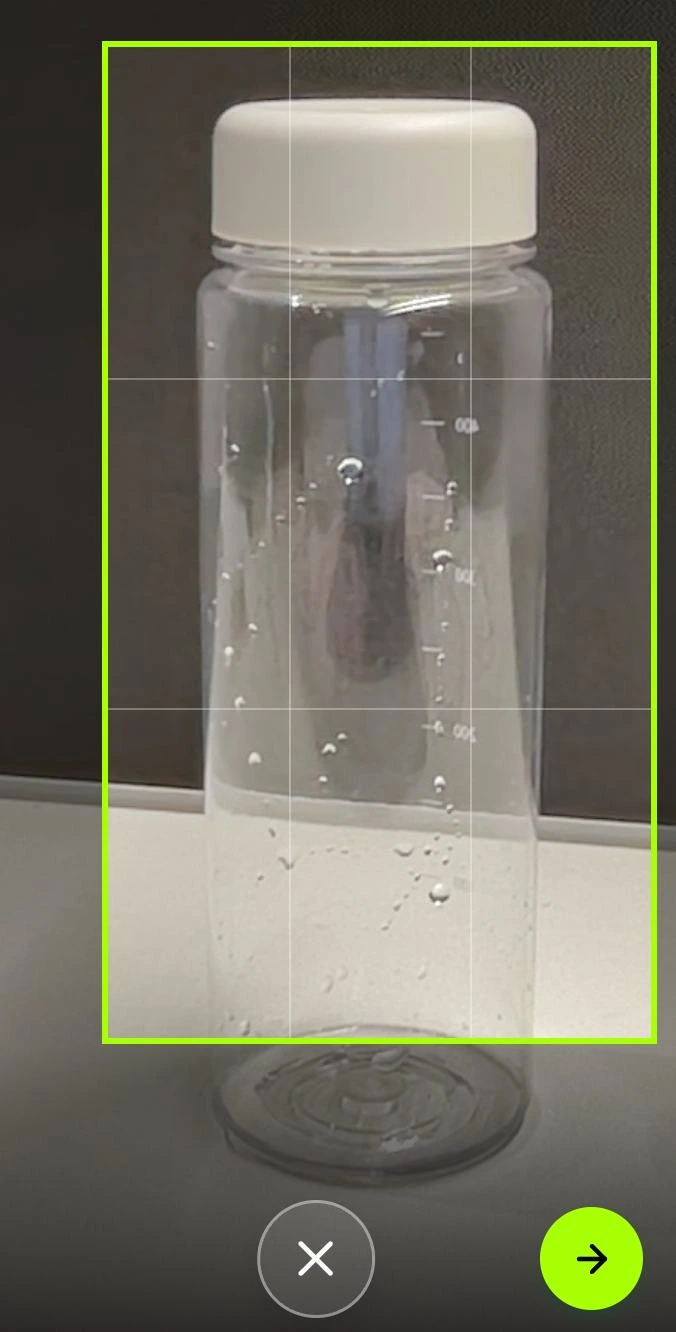

MobileNet On-deviceMobileNet 端侧识别

Gemini Vision Cloud APIGemini Vision 云端 API
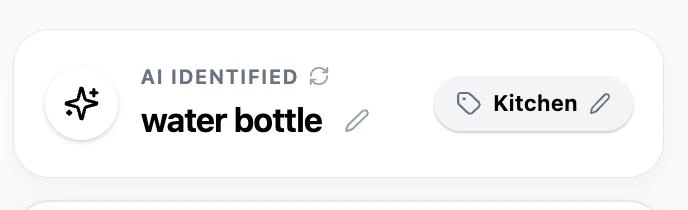
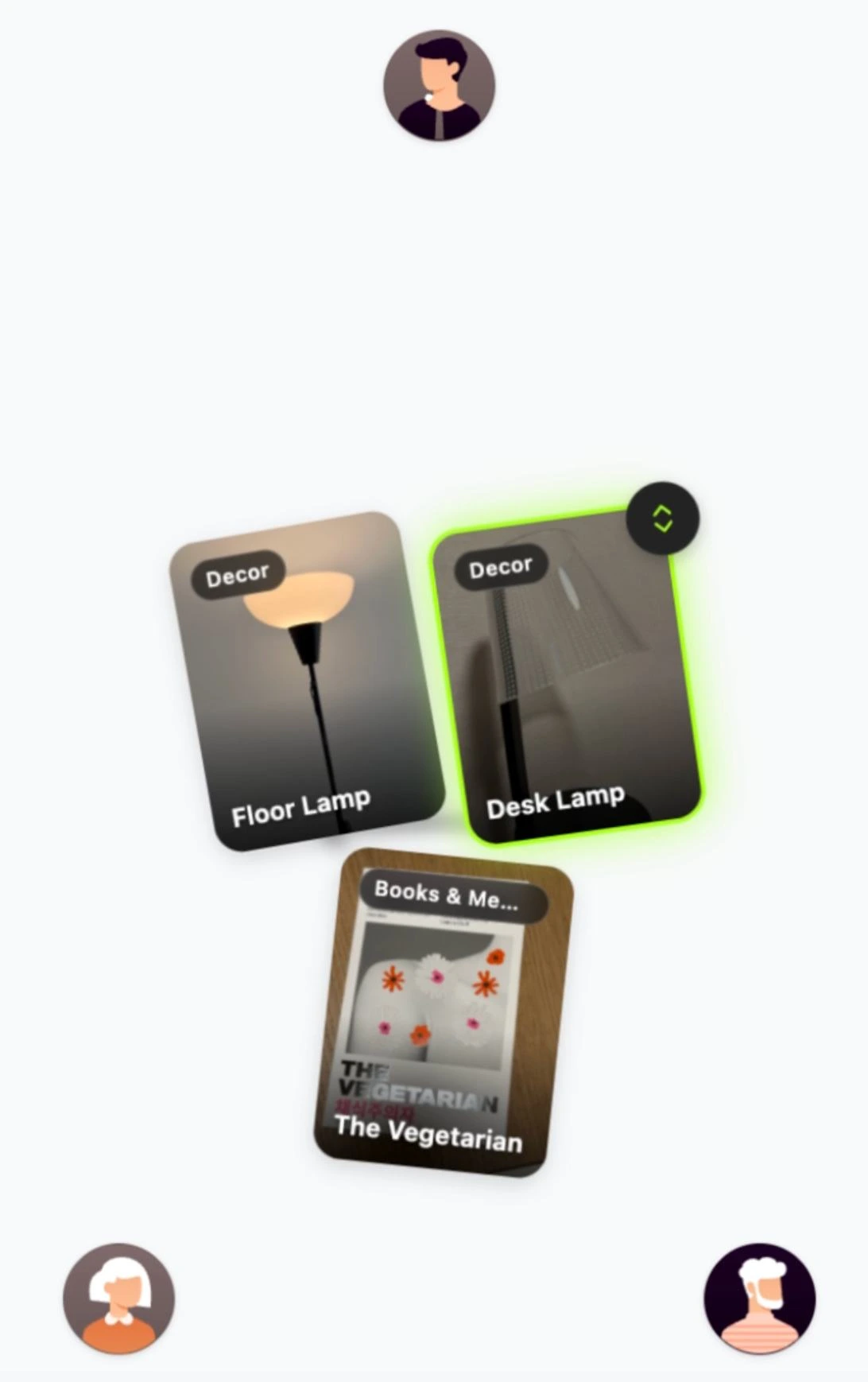
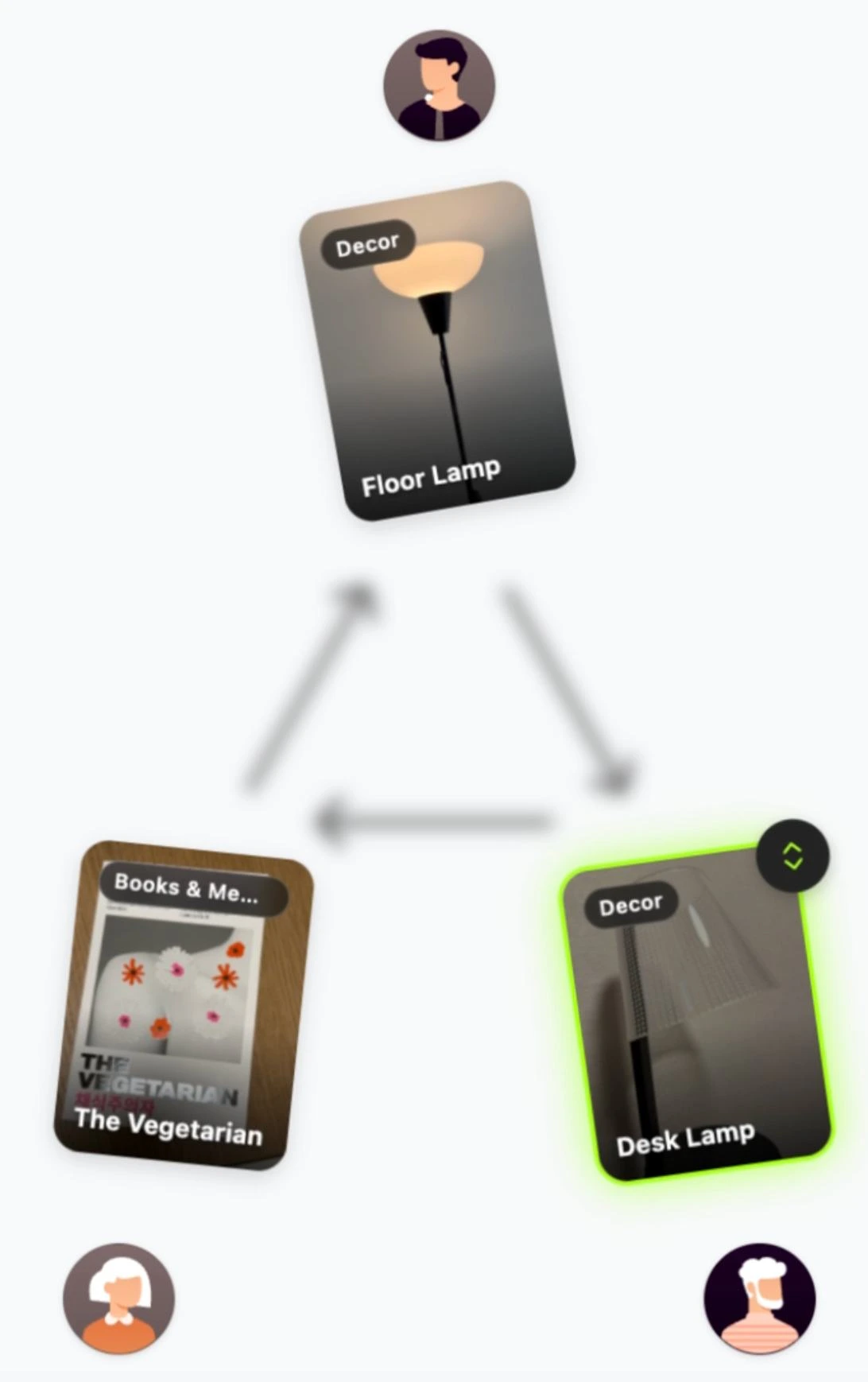
Unclear AI Match Exchange Animation交换匹配动画不够清晰
Rebuilt the animation with controlled direction and speed. It plays once when a match group enters view, then returns each card along the same path.重新控制动画的方向与速度。每个匹配小组进入视野时播放一次,随后各张卡片沿原路径返回。
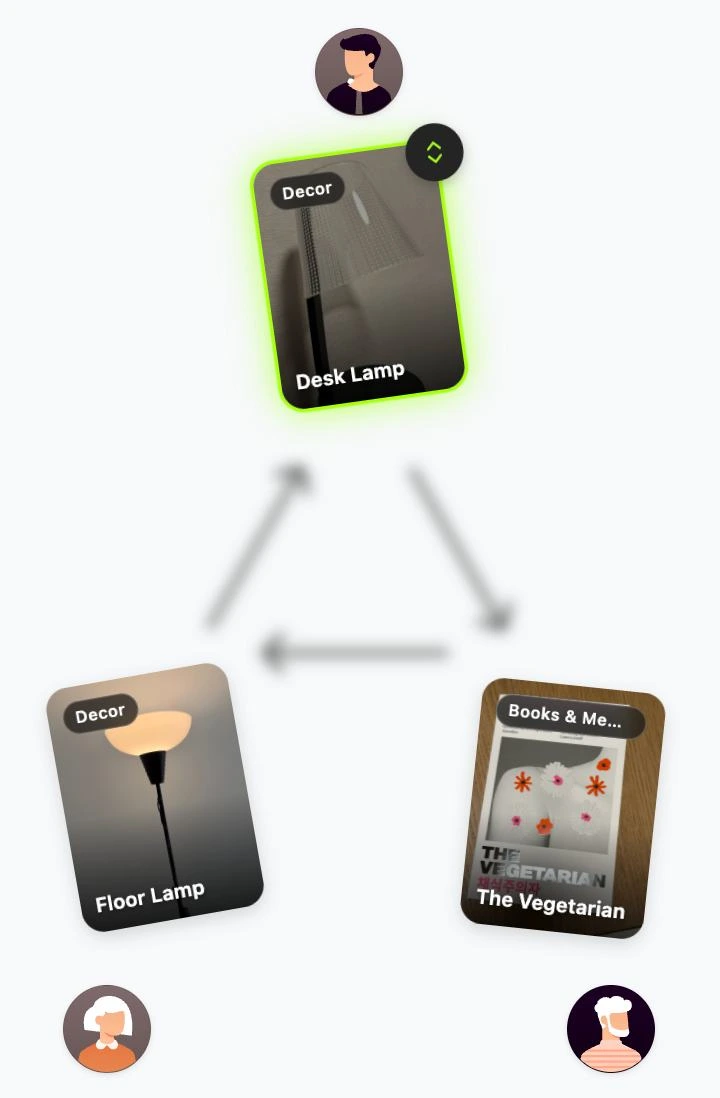



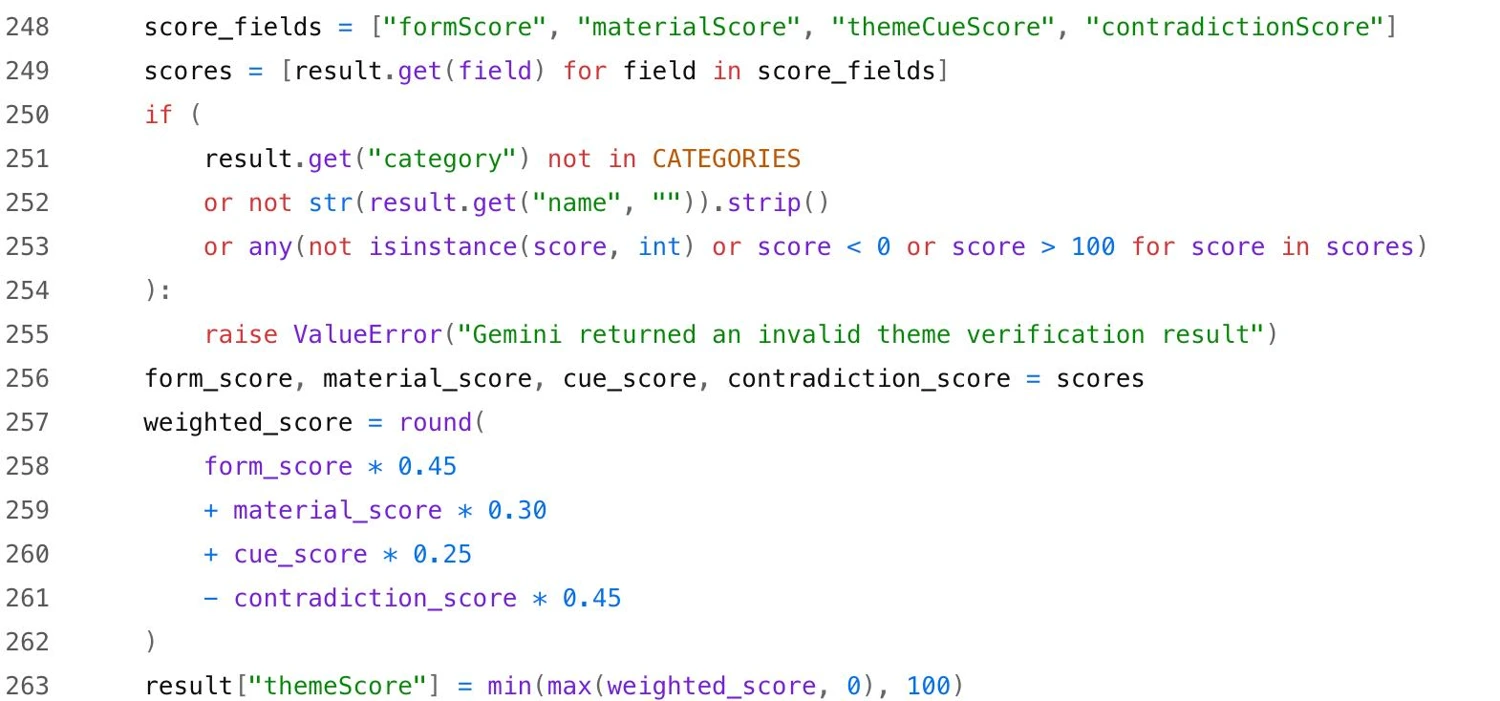
Blind Box-Low Verification Pass Rate盲盒审核通过率低
Replaced direct similarity scoring with feature-based verification. The AI assessed shape, material, theme cues and contradictions before calculating the final score.用基于特征的审核替代直接相似度打分。AI 先评估形状、材质、主题线索及矛盾点,再计算最终得分。
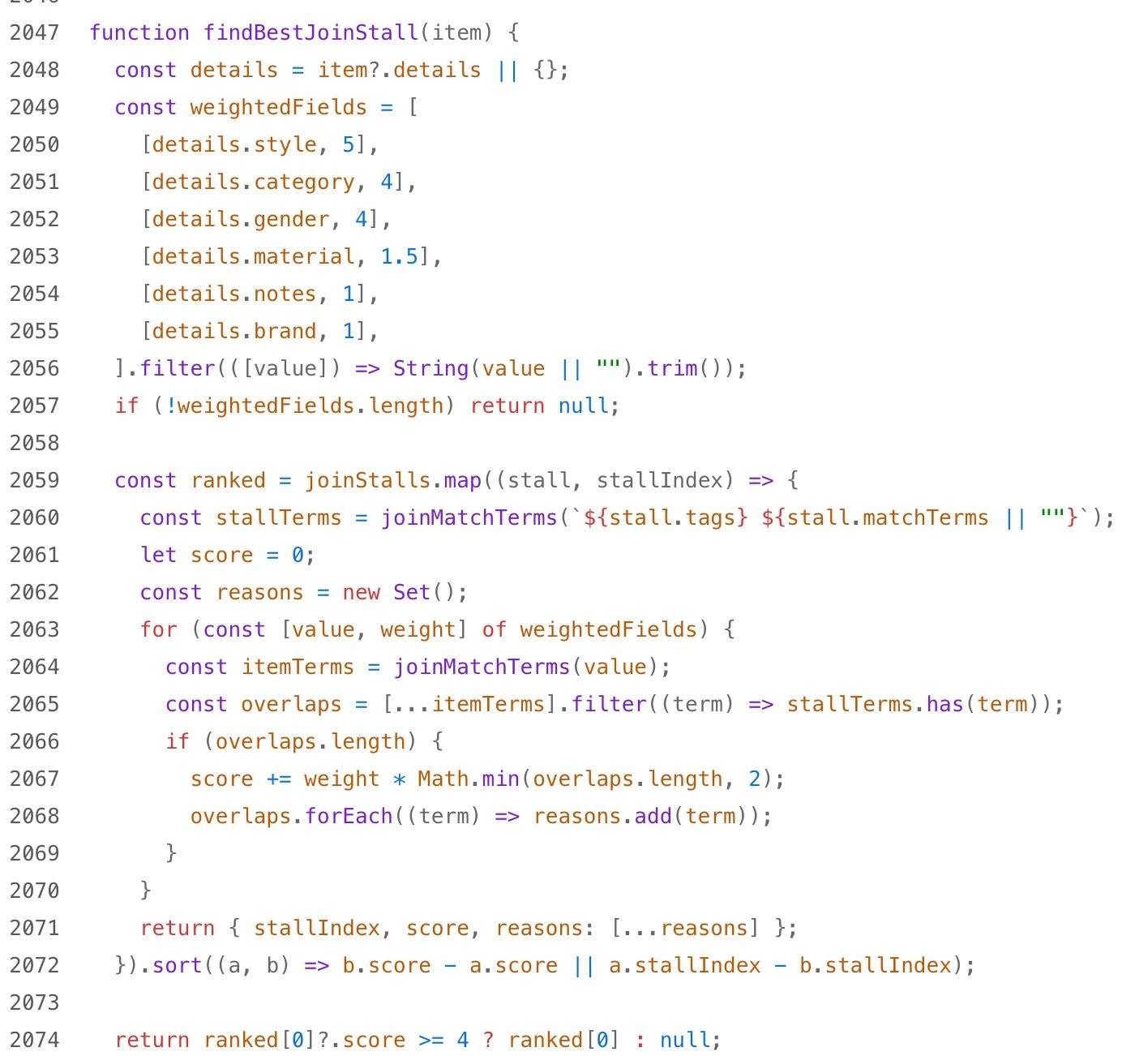
API-Based Stall Matching Was Slow and CostlyAPI 摊位匹配耗时且成本较高
Reuse user-entered attributes with a small local semantic vocabulary. Weighted scoring compared each item with every stall and recommended the highest-scoring match.复用用户填写的物品属性,配合小型本地语义词库。将每件物品与各个摊位逐一加权比较,推荐得分最高的匹配。
Service Scenario and Feedback服务场景与反馈
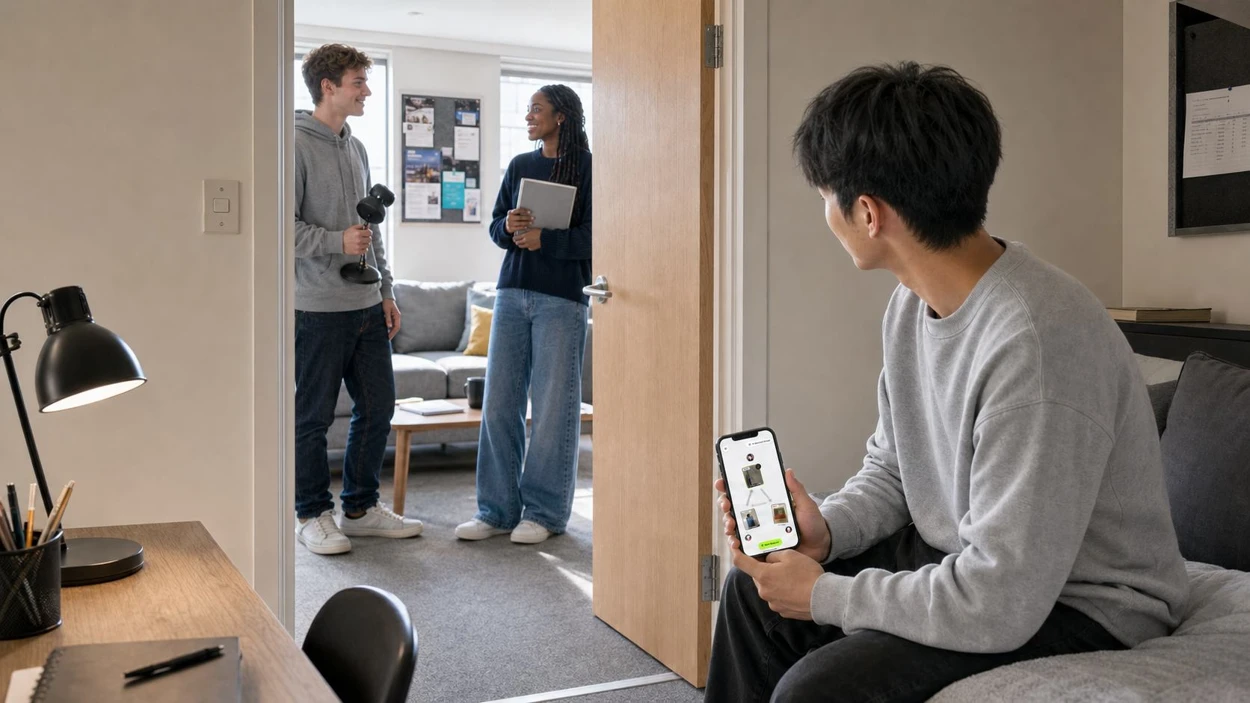
Exchange物品交换
The item as a social anchor made the first interaction feel natural rather than forced.交换的物品给双方提供了共同话题,让初次互动更加自然。
Feedback反馈
Users want a clear deadline to complete and confirm each exchange.参与者希望明确每次交换的完成与确认期限。
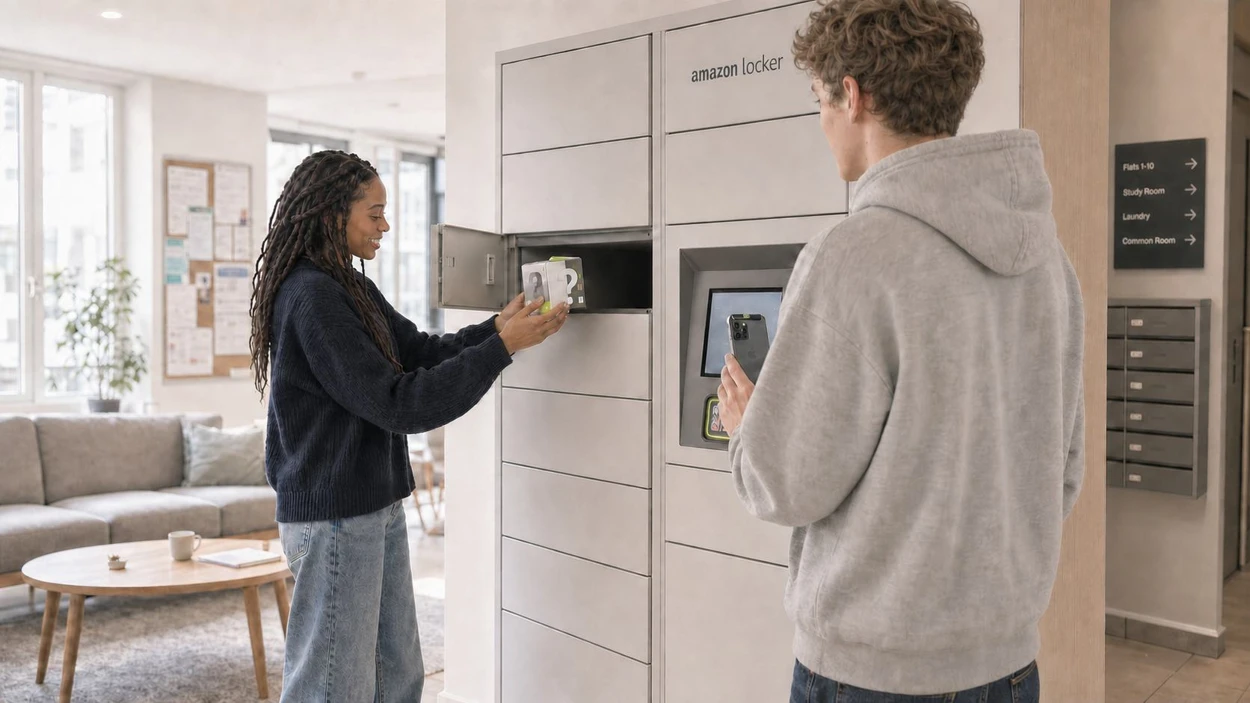
Blind Box盲盒
The surprise format felt playful and less socially demanding.盲盒的惊喜感增添了趣味,也降低了社交压力。
Feedback反馈
Users ask for clearer queue progress, collection deadlines and locker instructions.参与者希望更清楚地看到排队进度、领取期限和自提柜使用说明。
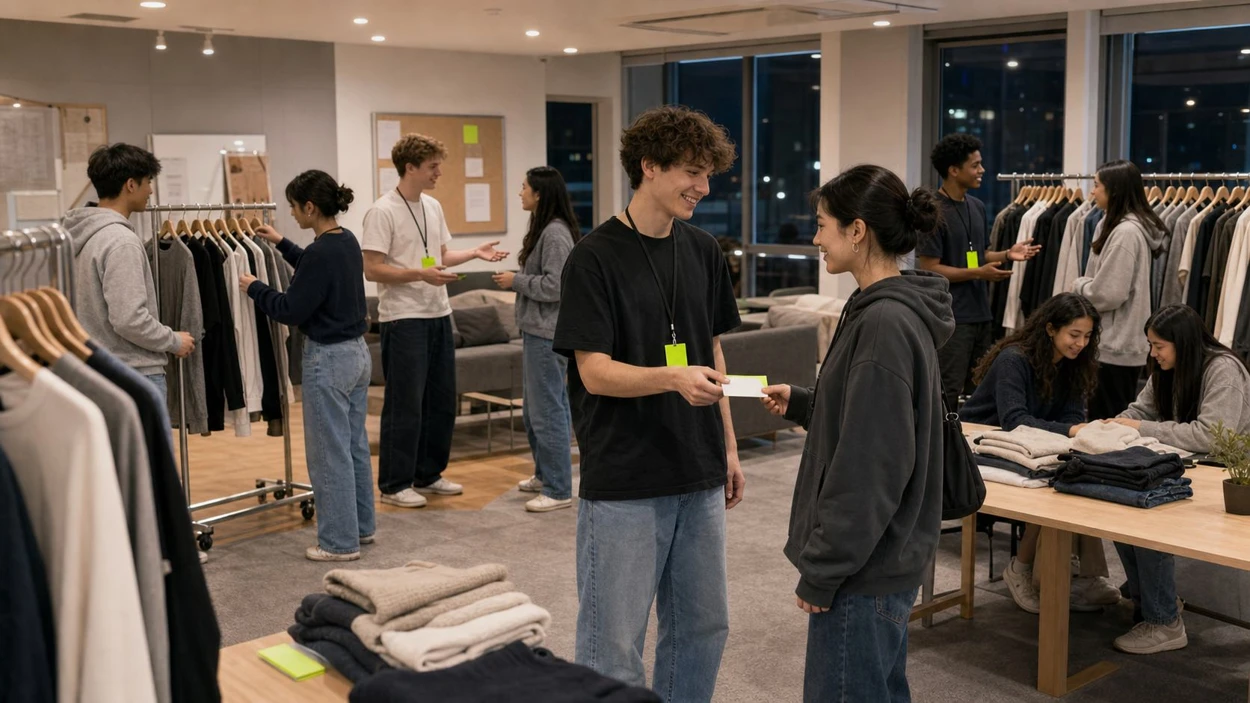
Night Market夜市
Working together on a stall helped participants bond and get to know one another.一起经营摊位帮助参与者熟悉彼此、建立联系。
Feedback反馈
Users want clearer roles within each stall, and more visibility around partner rewards.参与者希望明确摊位内的分工,并能清楚了解合作商户提供的奖励。
Design Reflection设计反思
Commercial student accommodation often treats community as something that can be provided through shared facilities and scheduled events. Yet bringing diverse residents into the same building does not automatically create common ground, while formal activities often produce only brief encounters without continuity. The issue is therefore not a lack of willingness to connect, but a gap between providing communal space and enabling social relationships to form. If proximity, amenities and organised events are not enough, how might community be cultivated through everyday life itself?商业学生公寓往往认为,只要提供共享设施、定期举办活动,就能形成社区。但把背景各异的住户安排在同一栋楼里,并不会自动带来共同话题;正式活动中的短暂相遇也很难延续。住户愿意结识他人,共享空间却未必能帮助他们真正建立关系。如果地理上的接近、设施和有组织的活动都不够,社区还能怎样在日常生活中生长?
Hau responds by using the everyday need to pass on unwanted items as a social anchor. Objects become a form of indirect communication: they reveal interests and needs, create mutual value and give strangers a shared purpose before conversation is required. As exchanges recur, common interests become visible, recognition can develop into trust, and trust into cooperation. Rather than delivering community as another programmed amenity, Hau creates a framework through which residents can gradually build it themselves.Hau 以转赠闲置物品这一日常需求作为社交的起点。物品成为间接交流的媒介:它们透露出兴趣与需求,为双方创造价值,也让陌生人在开口前就有了共同的目的。反复交换让共同兴趣逐渐显现,相识可以发展为信任,信任又能带来合作。Hau 为住户提供一个框架,让他们逐渐建立自己的社区。
Future Directions未来方向
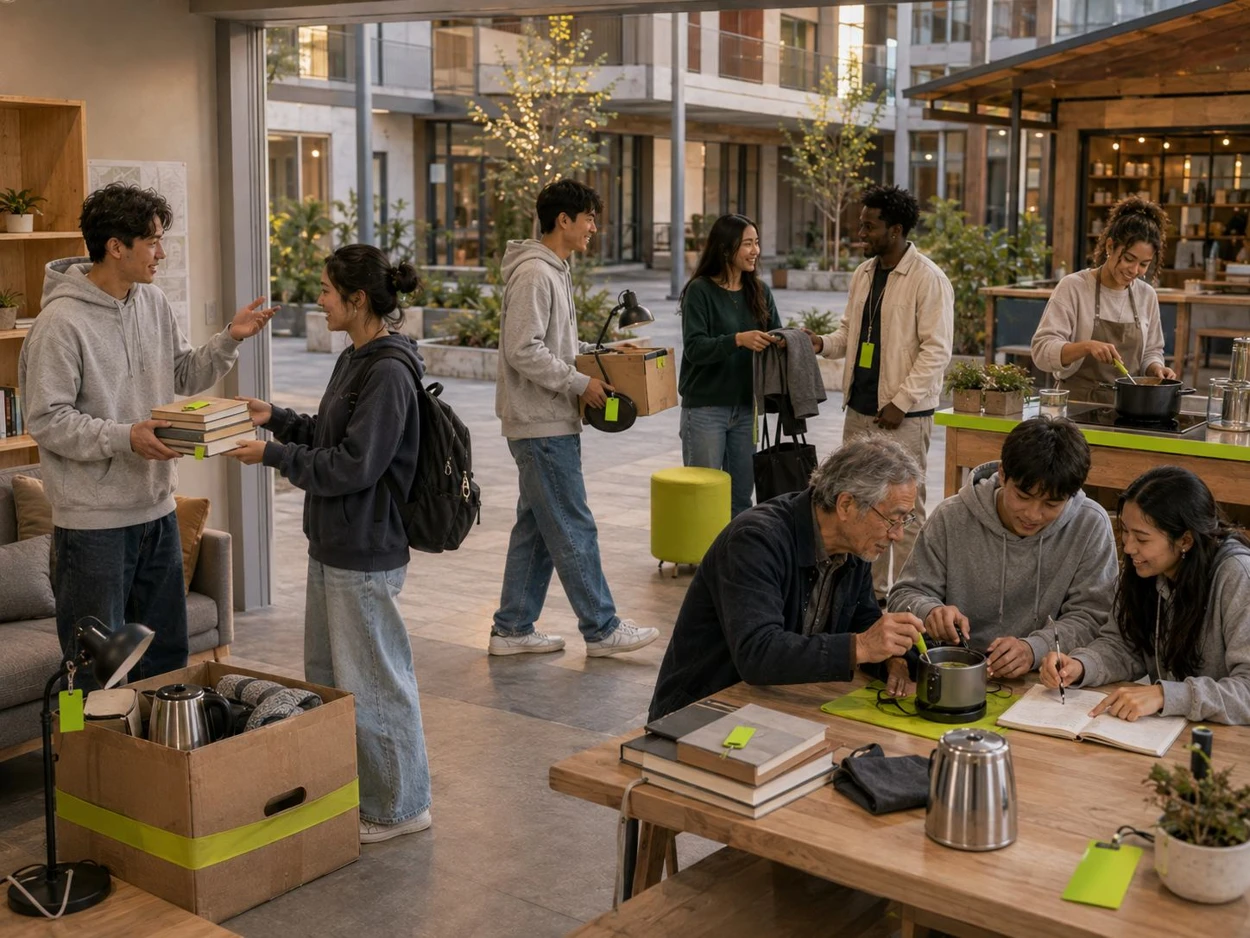
- Intergenerational exchange跨届交换
- Connecting departing residents, newcomers and alumni through passed-on objects.通过传递物品,连接即将搬离的住户、新住户和校友。
- Beyond student housing走出学生公寓
- Expanding into universities, neighbourhoods and wider society.将服务拓展到高校、街区和更广泛的社会。
- From objects to knowledge从物品到知识
- Extending exchange to skills, advice and mutual support.将交换拓展到技能、建议和相互支持。